
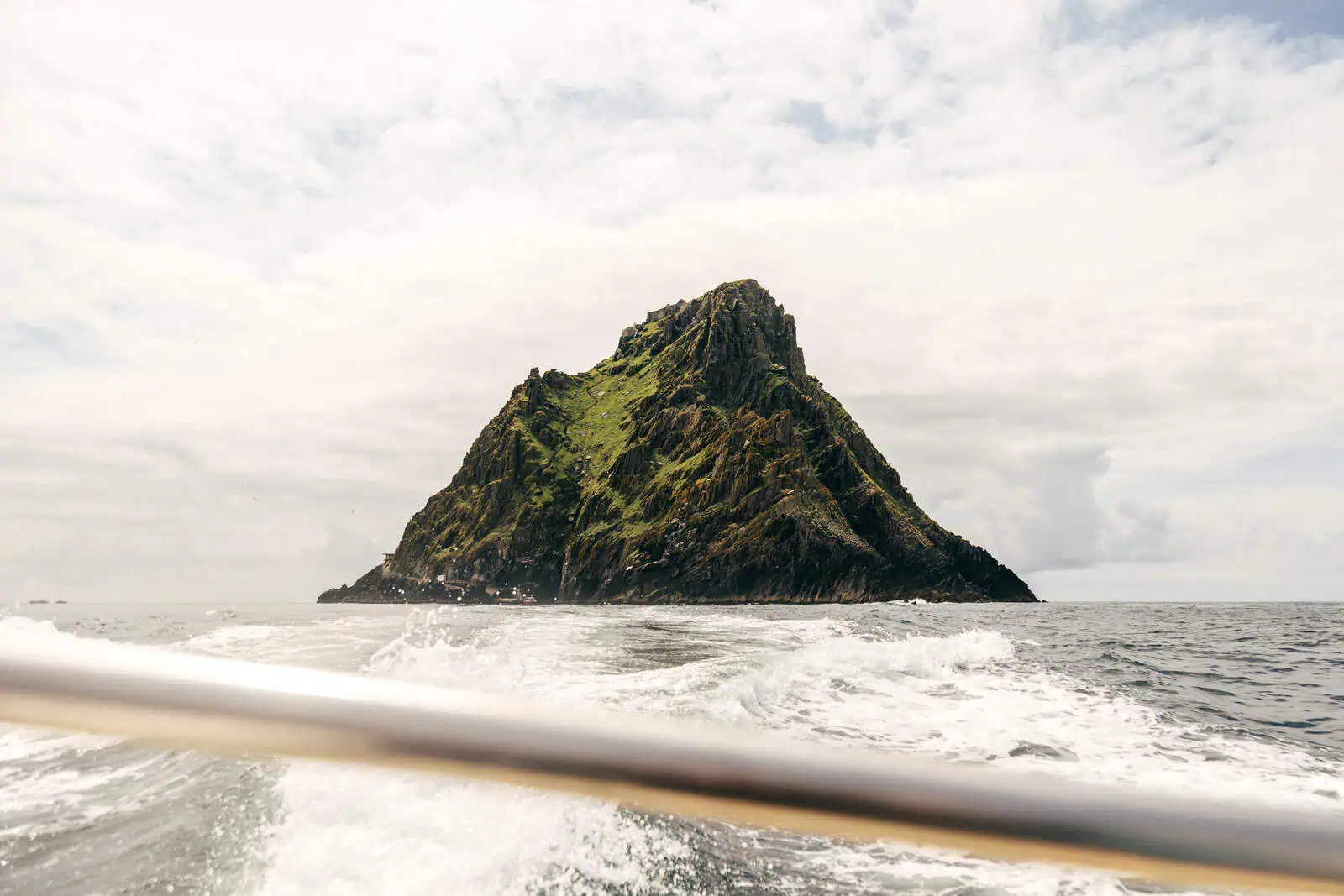
Departing from Portmagee
Plan your visit to Skellig Michael
Everything you need to know before you travel. Getting to Portmagee from Dublin, Cork and all major airports, choosing the right tour, understanding what the day involves and the physical requirements for the tours. We wrote these guides are with first time visitors in mind but they are also useful even if you’ve taken a Skellig Michael Tour before. We hope they will help you to come correctly prepared for the tours.
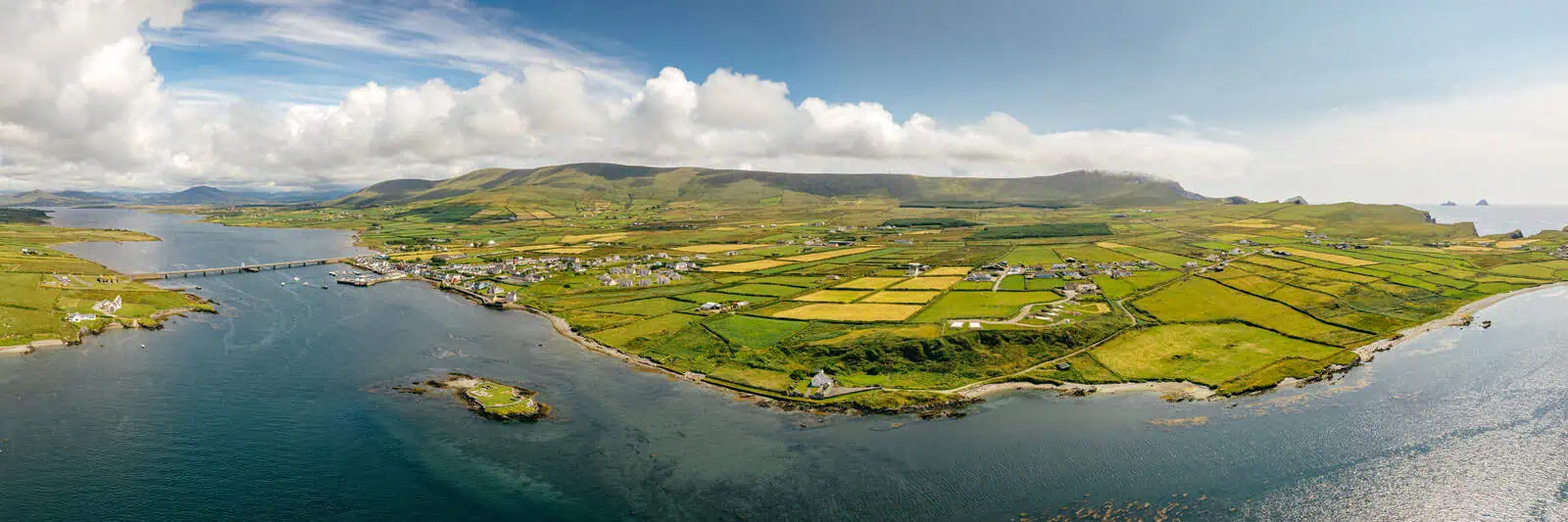
Directions from all major towns, cities and airports including Dublin, Cork, Kerry Airport and Killarney with parking and harbour arrival information.
Accommodation options in Portmagee and the surrounding area for those arriving the night before or staying on after their tour.
A landing tour brings you onto the island. An eco tour keeps you on the boat and takes you around both islands at close range.
Close to five hours from departure to return with a 45 minute crossing each way and roughly two and a half hours on the island.
All visitors must watch the OPW safety briefing before landing. Covers age restrictions, the terrain and what to be aware of on the island.
The island is open from May to September but the experience varies depending on the month. What to expect at different points in the season.
More in this section
Six centuries of monks
History of Skellig Michael
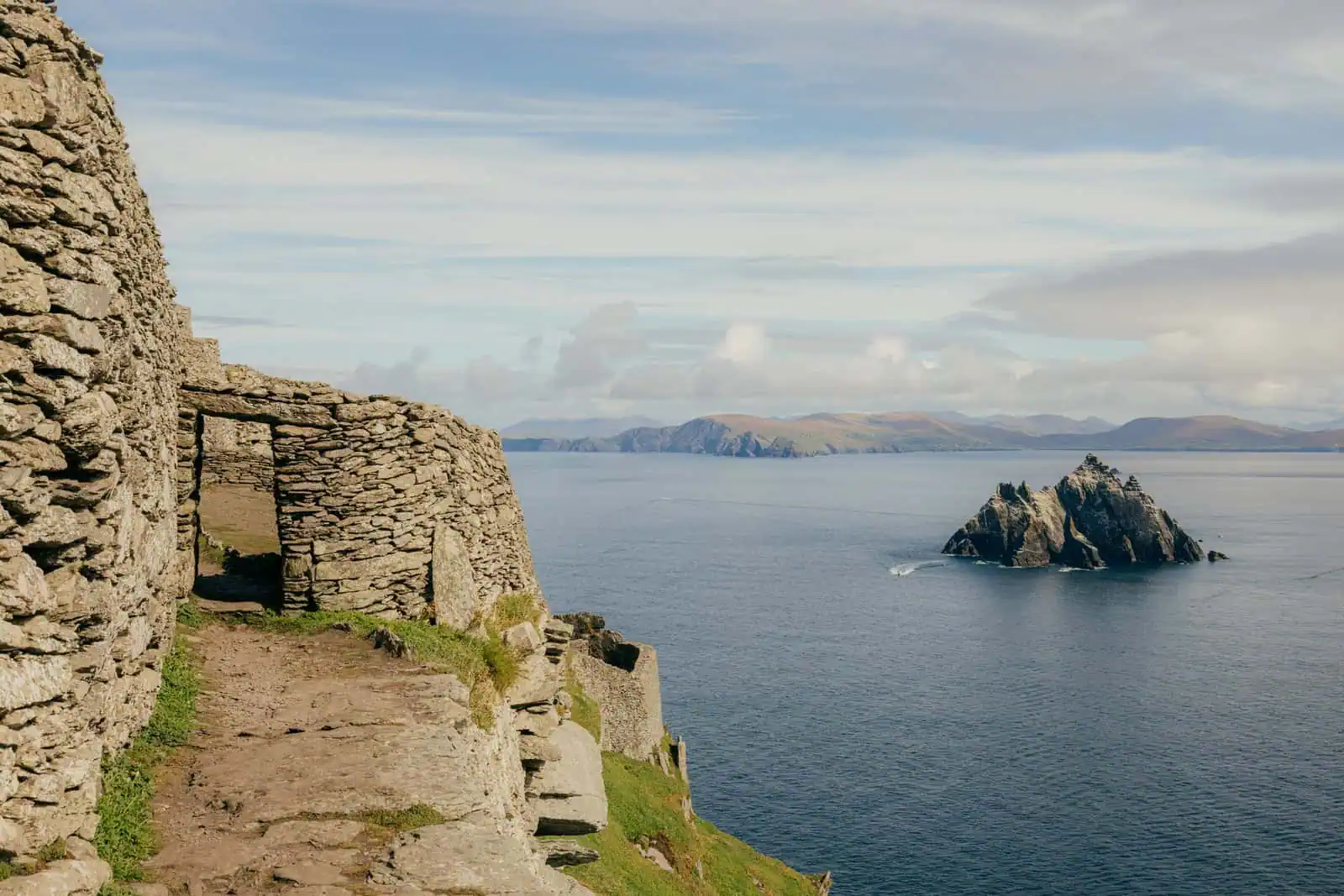
Skellig Michael was inhabited by monks for roughly six hundred years. They built their cells, oratories and staircases from dry stone with no mortar and the results have lasted over a millennium. This section covers what is known about the monastery, who founded it, and the inscription of the island as a UNESCO World Heritage Site.
An Atlantic island shaped by centuries of monastic life, Viking raids and remarkable isolation from the mainland.
Inscribed in 1996 for its early Christian monastic architecture preserved by remoteness and limited access.
St. Fionán is credited with founding the monastic community on Skellig Michael, most likely in the 6th century.
Two lighthouses were built in the 1820s but only one is still operational today.
More in this section
Among Europe’s largest colonies
Wildlife on the Skellig Islands
The sea around the Skelligs are productive and the rock faces are undisturbed. Puffins nest on the upper slopes of Skellig Michael from late March until early August and Little Skellig is home to one of the largest gannet colonies in the world. Dolphins are sometimes seen on the crossing and grey seals lay on the rocks around both islands.

Atlantic puffins arrive in late March, nesting on the grassy slopes in their thousands, and leave by early August.
Around 70,000 gannets breed on Little Skellig, making it one of the largest colonies in the world.
Beyond puffins and gannets, the islands are home to storm petrels, Manx shearwaters, razorbills, guillemots and kittiwakes throughout the season.
More in this section
In two Star Wars films
Skellig Michael in Film and Culture
The island has been featured in the most recent Star Wars films and countless videos have been shared online and viewed by millions of people around the world. Its dedication to St. Michael connects it to similar sites across Europe including Mont Saint Michel in Normandy and Monte Sant Angelo in southern Italy.

Skellig Michael was the filming location for Ahch To in The Force Awakens and The Last Jedi.
Devin Graham filmed a short adventure video on and around the Skelligs that has been viewed millions of times across various platforms.
A geographical line connects Skellig Michael to St. Michael dedications from Ireland through Cornwall, Normandy and northern Italy.
More in this section
Recently updated
Planning a trip? Casey Skellig Michael Tours has operated landing and eco tours from Portmagee since 1965. The 2026 season is now open.
View Tours →