
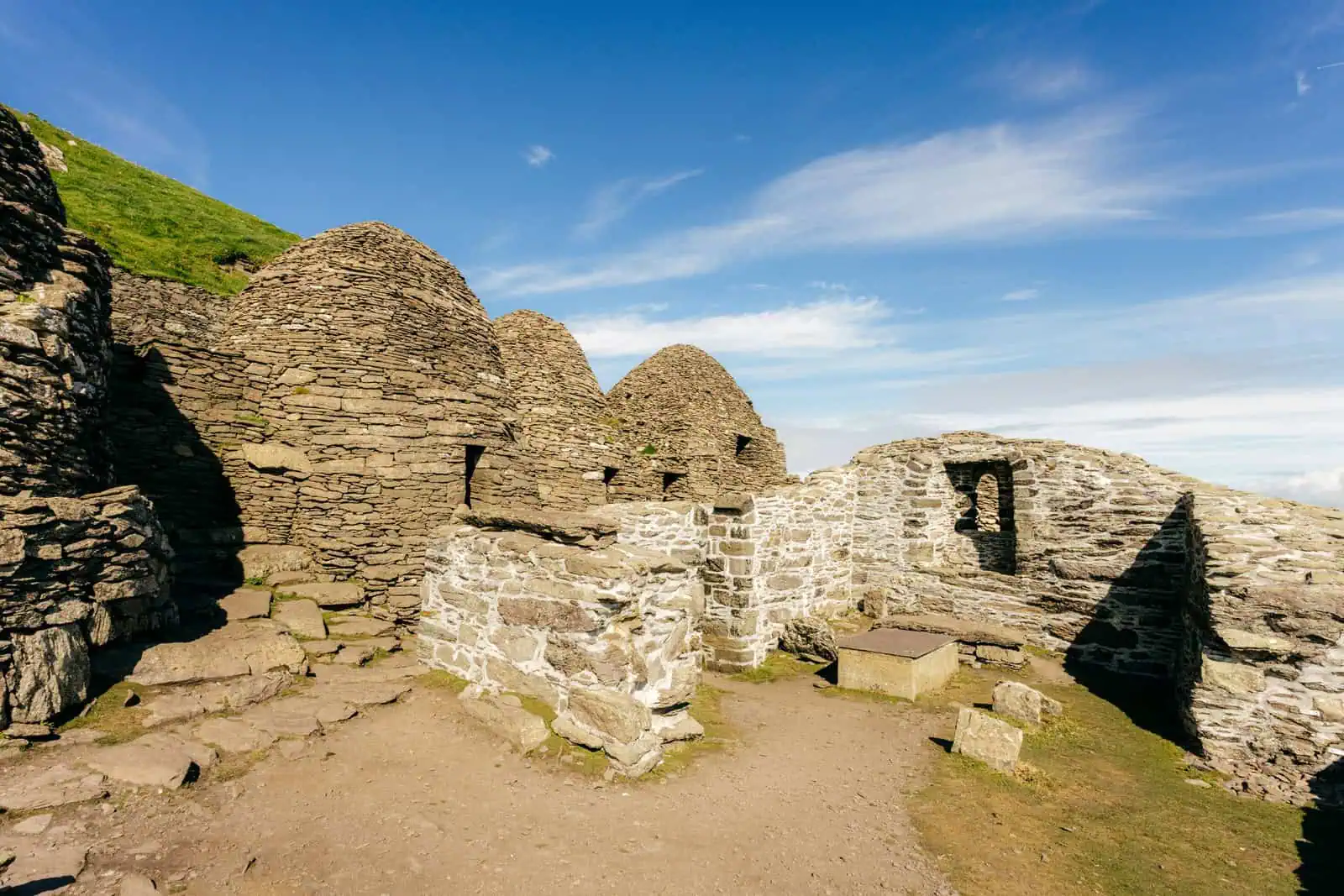
Skellig Michael
UNESCO World Heritage Site on the Wild Atlantic Way
The Skellig Islands
Skellig Michael & Little Skellig
The Skellig Islands are two remote Atlantic rocks located about eight miles (12 kms) off the coast of the Iveragh Peninsula in County Kerry. Skellig Michael is the larger of the two, rising to 218 metres at its highest point and OPW guides live and work on the island during the summer season. Little Skellig is entirely uninhabited.
The islands are composed of Old Red Sandstone and Devonian slate, shaped over millions of years by Atlantic erosion. The rock is steep and exposed on every face. There are no trees and little natural shelter. Fresh water was collected and managed by the monks using simple systems built into the rock.
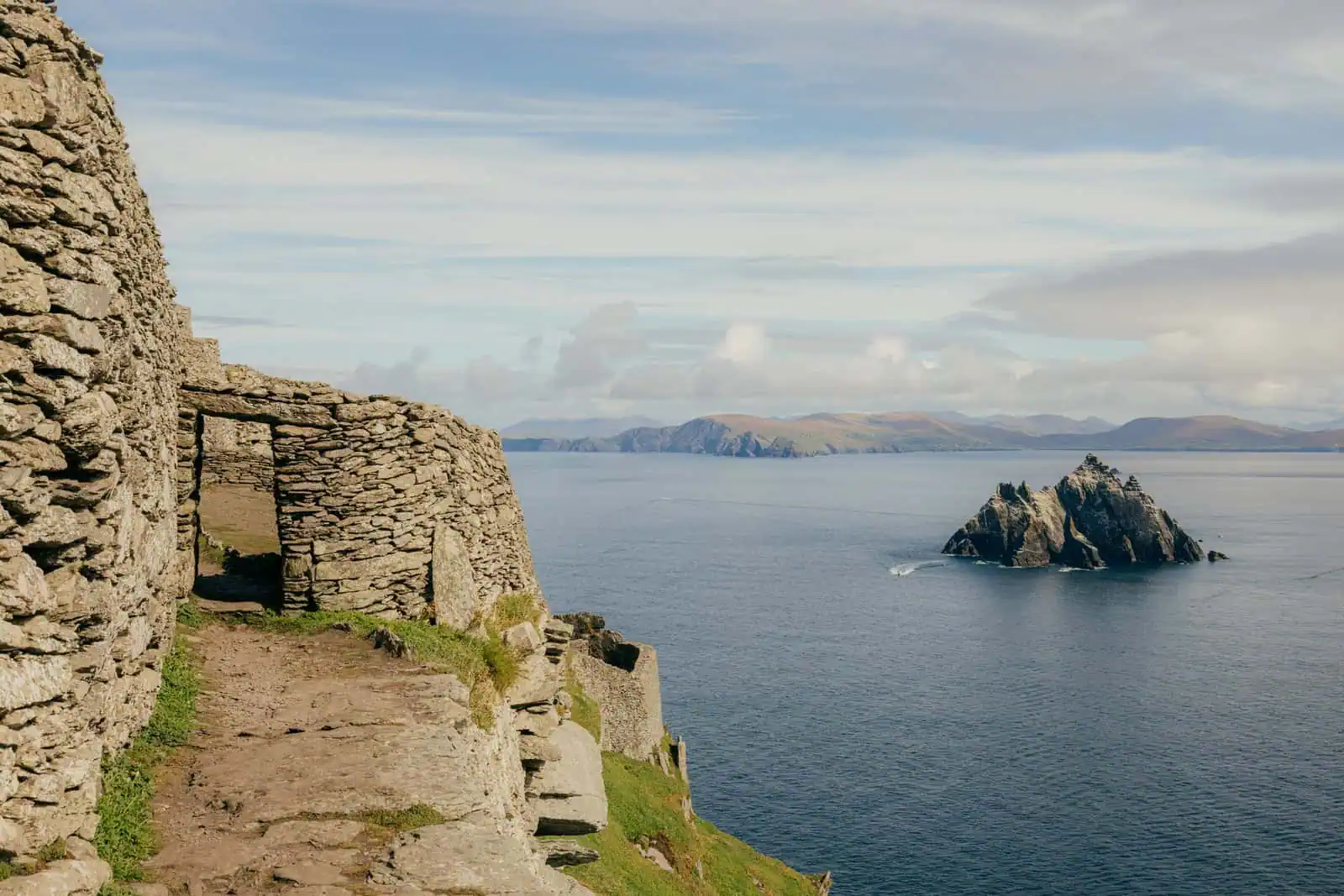
monastery on the Atlantic
Early Christian settlement
The earliest reference to the Skellig Islands dates to around 600 AD. Christian monks arrived seeking spiritual isolation, built their cells and oratories from dry stone without mortar, and descended the steep stone steps to access the shoreline below, where they gathered food from the surrounding waters. They spent their days praying, gardening and studying. The huts, round outside and rectangular inside, were designed to remain dry in all conditions. The community survived Viking raids in the 9th century before abandoning the island in the 13th century as conditions worsened and monastic traditions changed on the mainland.
What they left behind, still intact after a thousand years, earned Skellig Michael its UNESCO World Heritage designation in 1996.
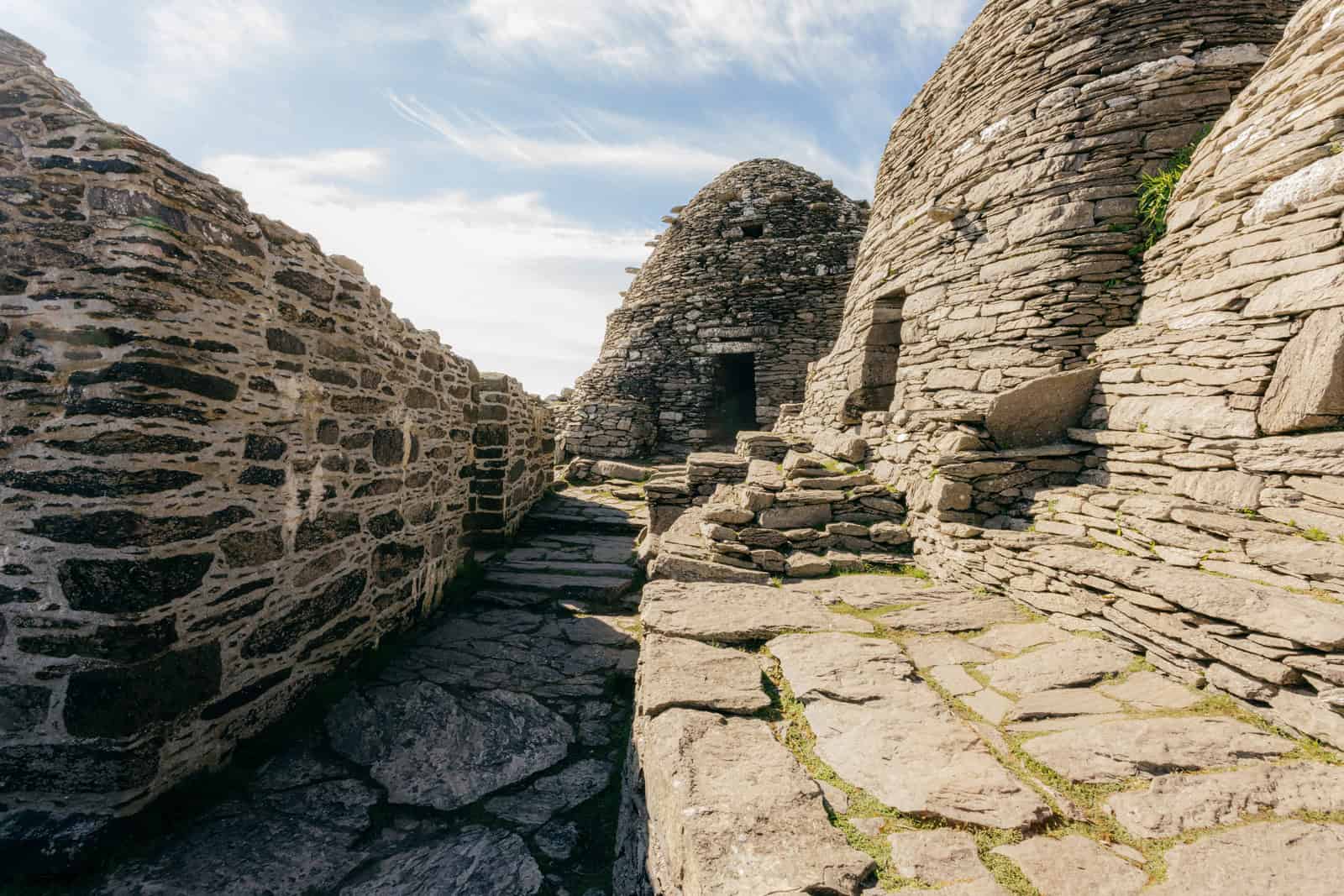
UNESCO World Heritage Site
In 1996, Skellig Michael was inscribed as a UNESCO World Heritage Site.
Read about UNESCO status →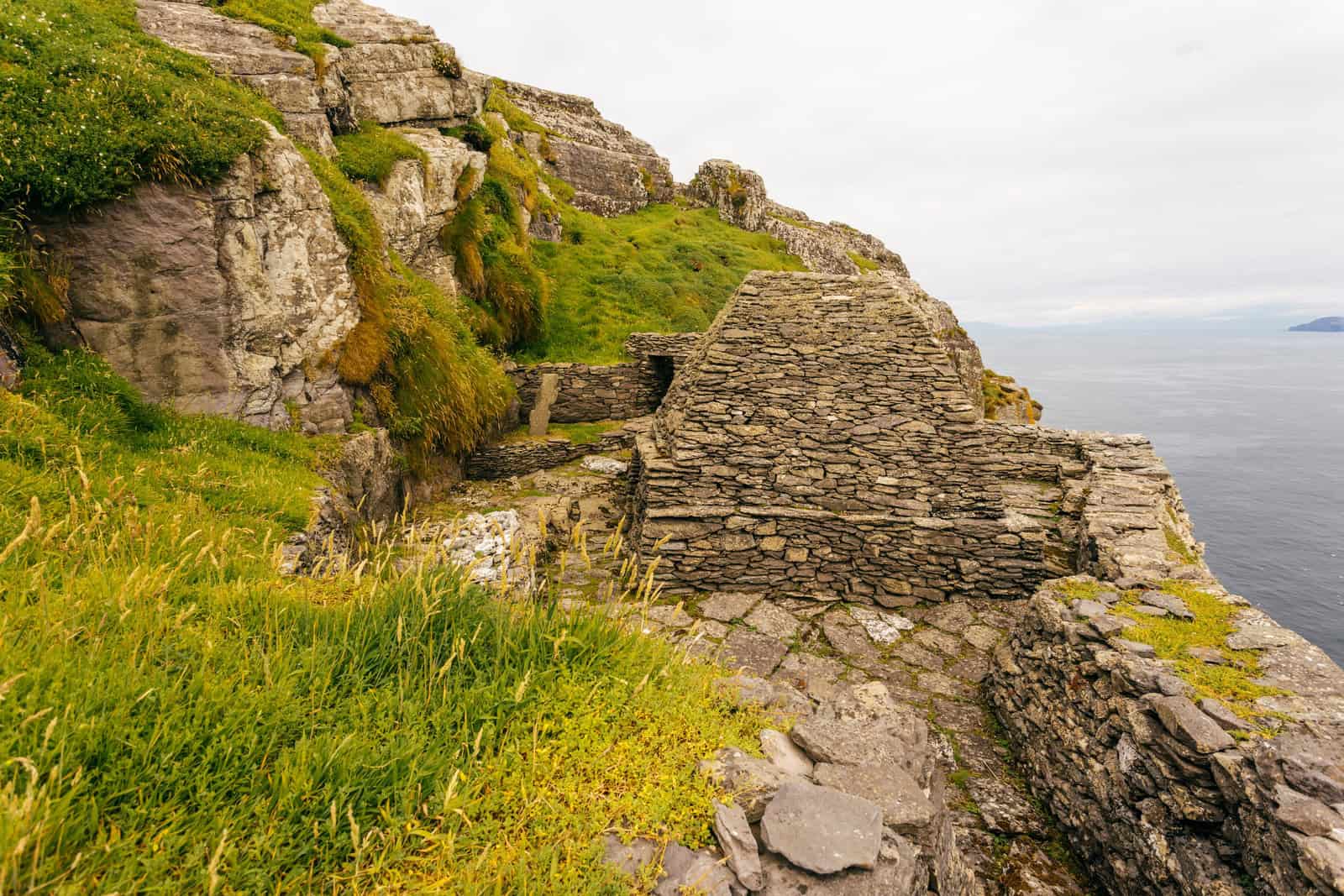
History of Skellig Michael
The full story of the monastery, the monks who built it, and the Viking raids they survived.
Read the full history →
Remote and Isolated
Life on Skellig Michael
Life on Skellig Michael was defined by isolation and physical hardship. The island is fully exposed to the Atlantic winds and rough seas. Everything the monks needed had to be carried up from the landing area at the base of the rock, step by step. In south-westerly gales, sea spray has been recorded striking the lighthouse keeper’s house 160 feet above sea level. Even today, access to the island depends entirely on sea conditions, which gives a sense of how relentless the environment would have been for those who lived on the island.
George Bernard Shaw
“The most fantastic and impossible rock in the world.“
Shaw visited Skellig Michael in 1910 and wrote to a friend describing it as a place that does not belong to any world that you and I have lived and worked in. The full letter is one of the most vivid accounts of the island ever written.
In a letter to Frederick Jackson, September 1910

Seabirds and other marine life
Wildlife of the Skellig Islands
The islands support a high concentration of seabird life. Puffins can be seen on and around Skellig Michael from late spring until early August and Little Skellig is home one of the largest gannet colonies in the world. Around 70,000 birds occupy almost every available ledge by April.
Dolphins can sometimes be seen on the way to and from the Skelligs while Grey seals often rest on the rocks at both islands.
Wildlife on the Skellig Islands →Visiting Skellig Michael
Tours depart from Portmagee
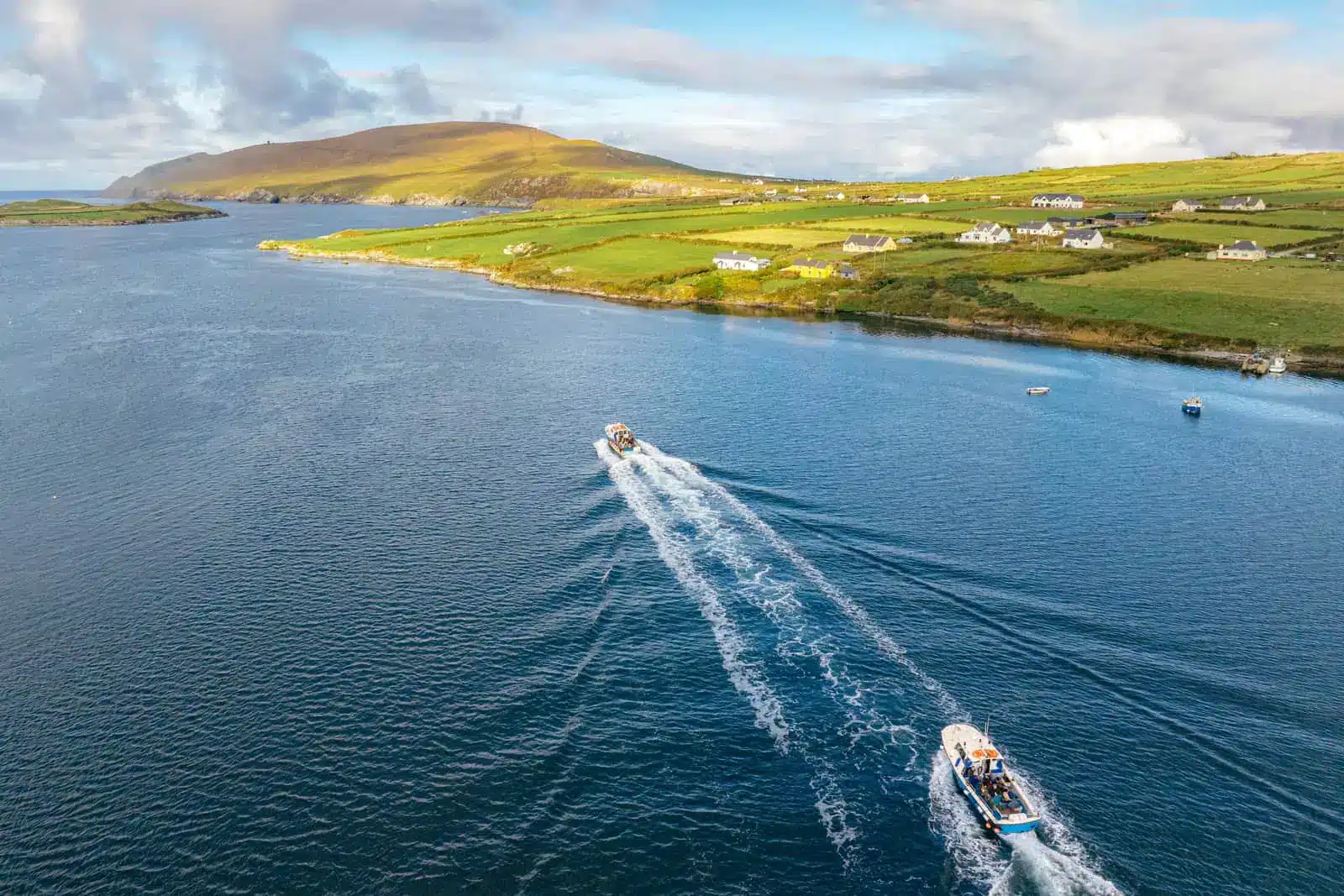
At Casey Skellig Islands Tours, we have operated landing and eco tours from Portmagee, across three generations since 1965. Our tours depart throughout the day from the marina in Portmagee, depending on the sea and weather conditions, and get you right up close to the islands to see the wildlife and historic sights either by staying on the boat or stepping off on to the island. The season runs from April to October and advance booking is essential.

Skellig Michael in film
Star Wars and the Skelligs
The Skellig Michael scenes from the most recent Star Wars trilogy were filmed on the islands in 2014 and 2015. Episode VII “The Force Awakens” and Episode VIII “The Last Jedi” both used the island as the location for Ahch-To, where Luke Skywalker had retreated. The ancient steps and monastic stonework appear on screen largely unchanged.
Star Wars filming on Skellig Michael →