
St. Fionán is traditionally credited with founding the monastic settlement on Skellig Michael in the early medieval period, although the exact identity of the saint is uncertain. The monastery that developed on the island reflects the wider Irish tradition of extreme religious isolation, where monks chose remote locations to pursue prayer, study, and survival in harsh conditions.
Who was St. Fionán?
The historical record is unclear, and there is ongoing debate about which “Fionán” is meant. Some link the tradition to Finnian of Clonard (470 to 549), a major figure in 6th century Irish monasticism. Others suggest different early saints like St. Fionán the Leper or St. Fionán of Lindisfarne. While St. Michael’s Church was built later, the earlier monastic structures are tied to the 6th century tradition of these early Irish saints. Regardless of the specific individual, the tradition remains a central part of the island's heritage.
To understand the history of the island we need to look at why these men chose such a difficult place to live and how they managed to survive there for hundreds of years. The story of Skellig Michael is one of extreme isolation, precise engineering, and a very simple way of life.
Seeking Solitude on the Island
The monks who went to Skellig Michael were looking for solitude. In the early Irish church, there was a concept known as "white martyrdom." This meant leaving behind your home and comforts to live in a remote place to be closer to God.
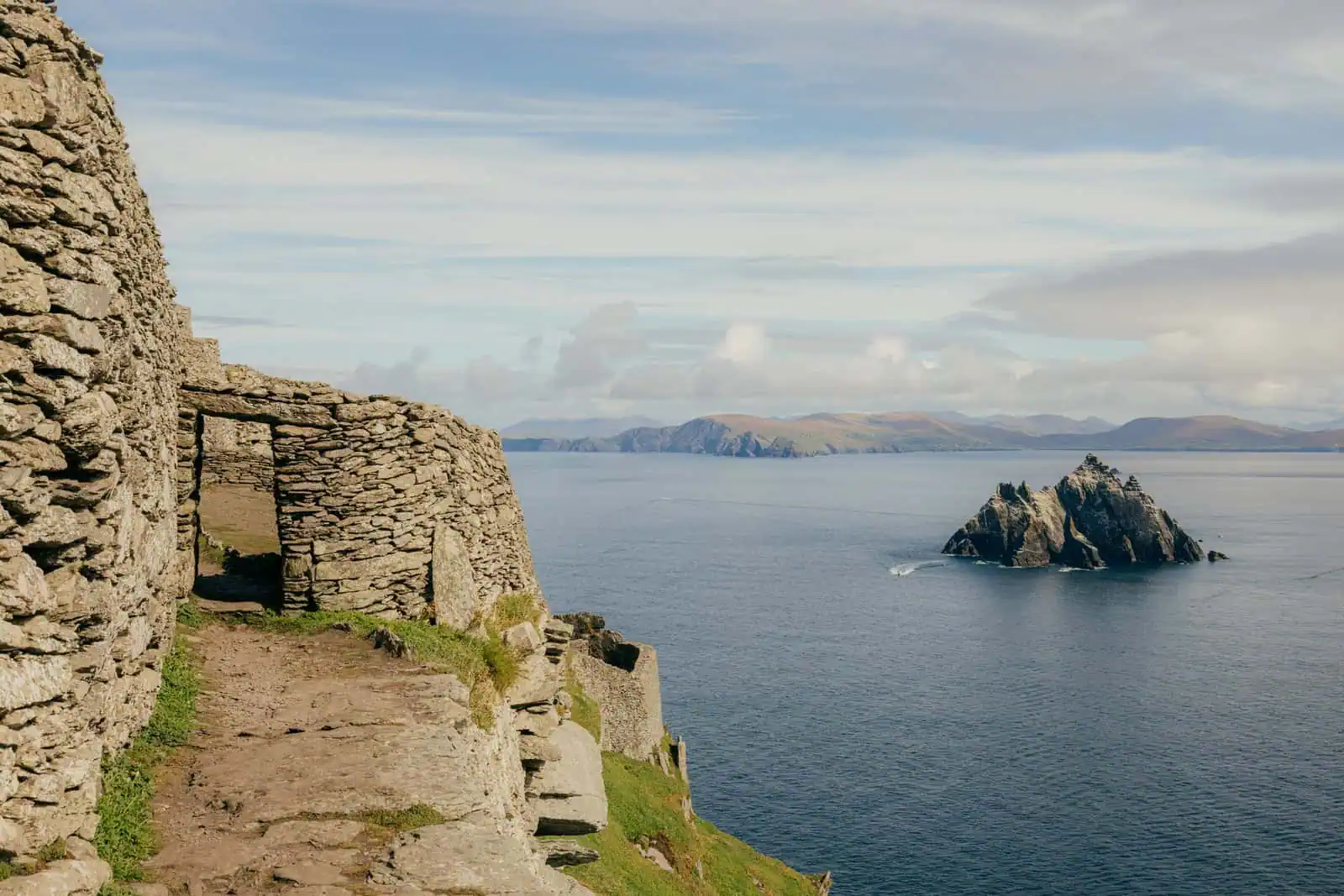
Skellig Michael was the ultimate place for total isolation. It is a jagged rock 12 kilometres off the coast of Kerry, rising 218 metres out of the Atlantic. In the 6th century, reaching the island in a small wooden boat (a currach) covered in animal hides was a dangerous task. Choosing to stay there permanently was a commitment to a life of extreme hardship. You can read more about the general history of Skellig Michael to see how this settlement evolved over time.
Monastic Engineering and Drystone Construction
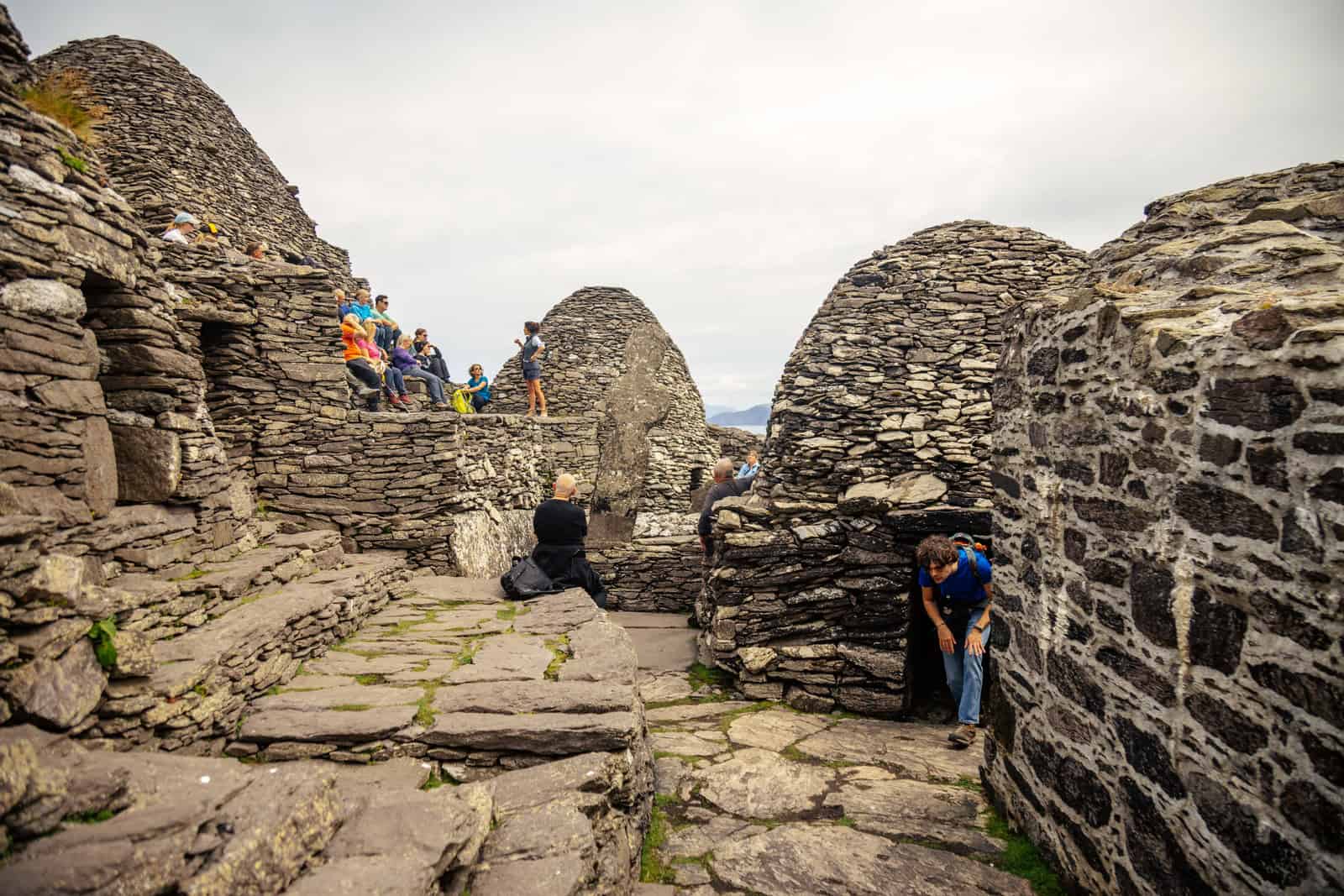
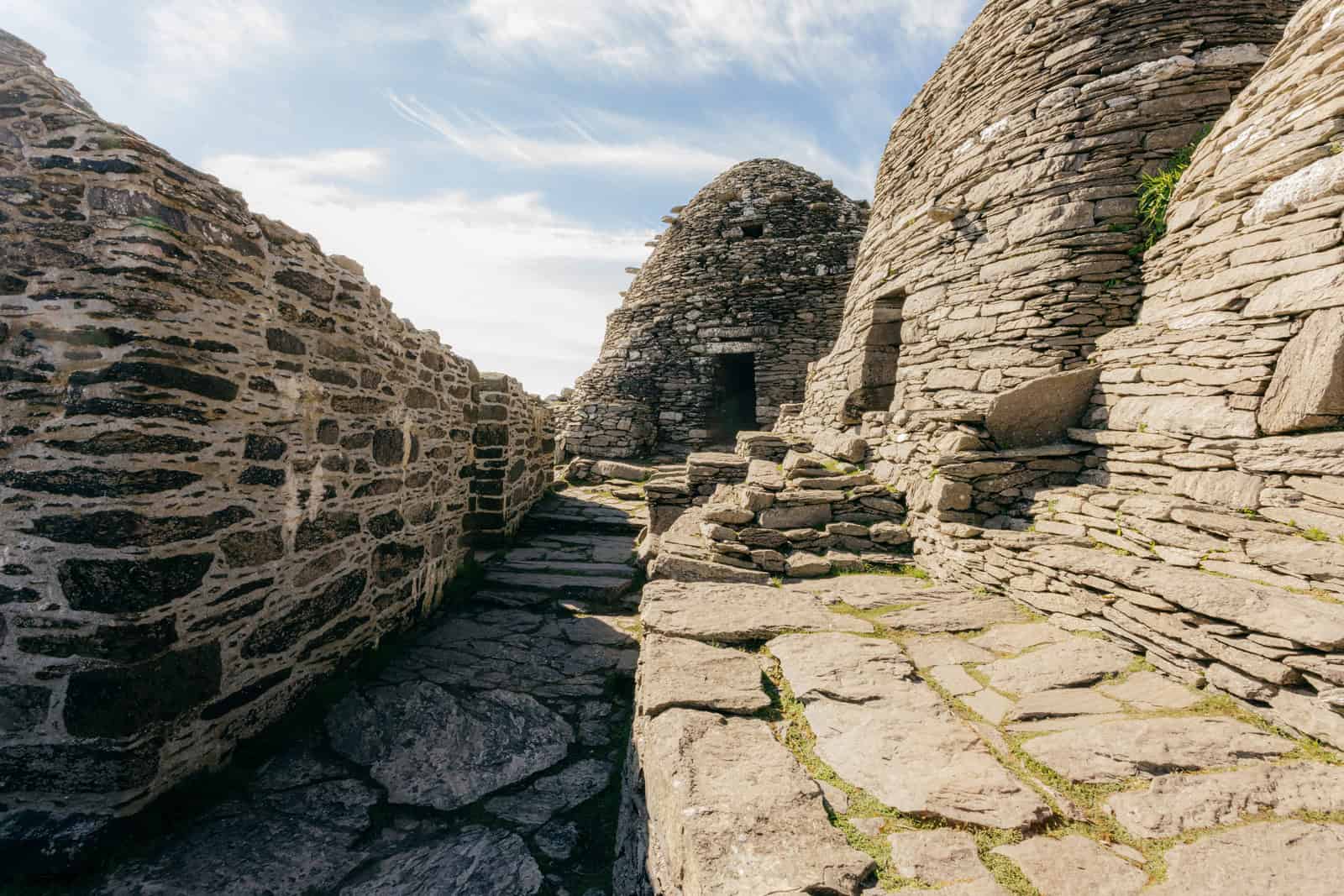
One of the most impressive aspects of the site is what is known as monastic engineering. The monks did not have mortar or cement. Every structure on the island was built using a technique called drystone construction. This involves layering flat stones so they slightly overlap. Each layer is laid slightly inward, allowing the structure to close at the top while shedding rainwater away from the interior.
The primary buildings are "clocháns," or beehive huts. They are circular on the outside and rectangular on the inside. Because of the way they were built, they are completely waterproof and have remained standing for over a thousand years despite the harsh Atlantic weather.
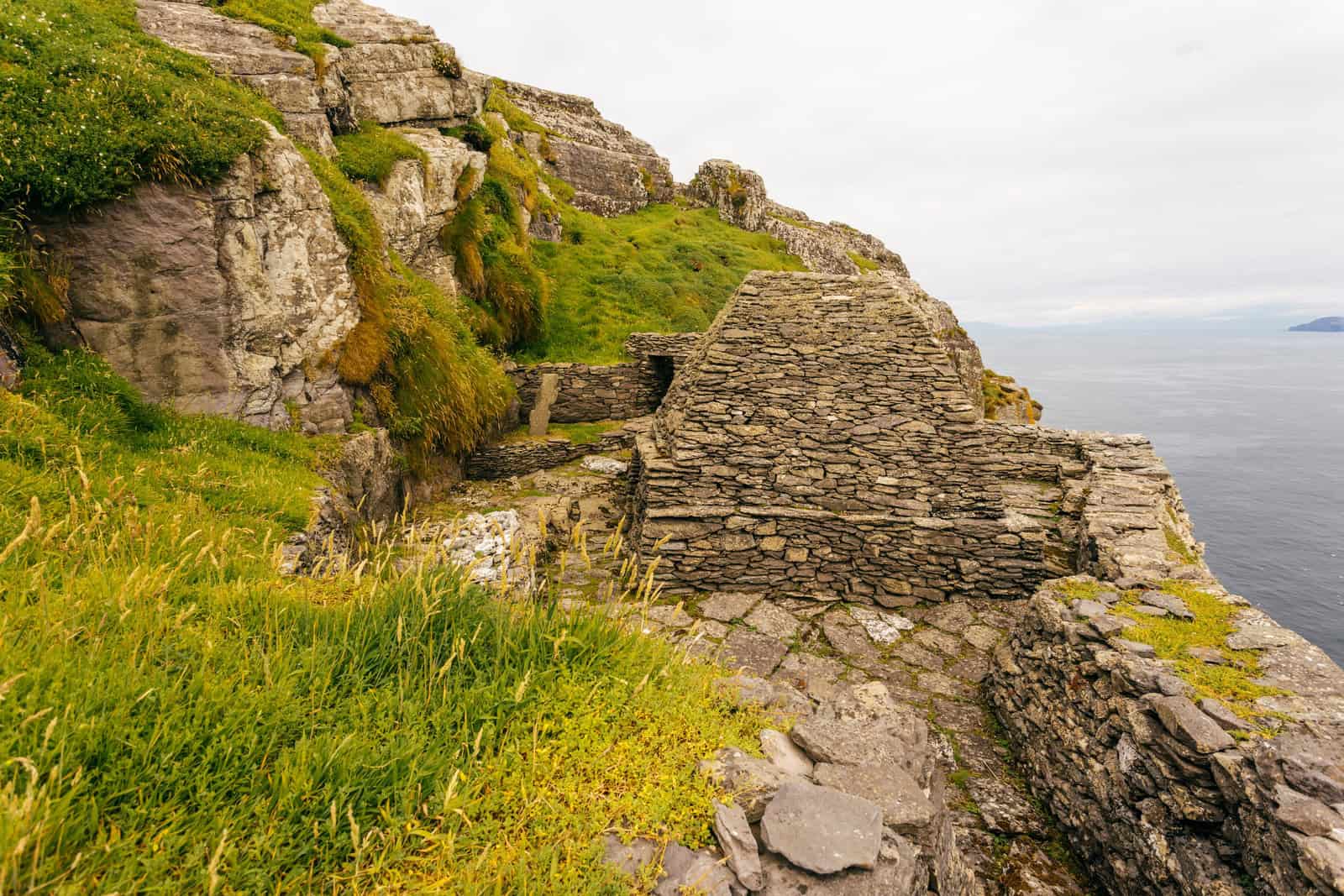
The monks built massive retaining walls to create flat terraces. This allowed them to build their monastery on a steep slope and gave them small patches of level ground for gardening. This level of skill is one of the reasons the island was later recognised as a UNESCO World Heritage Site.
How the Monks Lived
Life on Skellig Michael was functional and repetitive. The monks' day was divided between prayer, study, and manual labour. Survival required constant work.
Food and Water
The monks were largely self-sufficient, but their diet was limited. They ate what the island and the sea provided:
- Fish: They caught fish from the rocks or from their currachs.
- Birds and Eggs: They relied on the seabird colonies for food, particularly during the nesting season.
- Gardening: They grew vegetables and herbs in small terraces where they built up soil by hand. Skellig Michael is not just bare rock, but the natural soil layer was thin. Over thousands of years, seabirds such as puffins helped form pockets of soil through guano. That was not deep enough for a garden. The monks carried seaweed and sand up from the base of the island and layered it into their terraces until it was deep enough to grow vegetables.
- Water: There are no springs on Skellig Michael. The monks carved cisterns into the rock to collect and filter rainwater. This was their only source of fresh water.
Prayer and Manuscripts
When they weren't working to survive, the monks were in the oratories. They spent hours each day in communal and private prayer. They also focused on learning. Many Irish monks were scribes, and it is likely they spent time copying religious texts, though no specific manuscripts from Skellig Michael have survived the centuries.
The Monastery Layout
The monastery is located on a high shelf on the north-east side of the island. It is protected from the prevailing south-westerly winds by the peak of the mountain. The settlement consists of:
- Six beehive huts where the monks slept.
- Two small oratories used for prayer.
- A larger stone church called St. Michael’s Church, built later, likely in the 10th or 11th century. It marks a shift in construction because it used lime mortar rather than drystone alone. It also reflects when the island was officially dedicated to Saint Michael.
- A monk’s graveyard with small stone crosses.
- A garden area where they grew their food.
The monks also built three sets of stone steps leading up from the different landing points on the island. These steps were carved and laid by hand. They are still used by visitors today.
Viking Raids and the End of the Settlement
The isolation of Skellig Michael didn't protect it forever. In the 9th century, Viking raiders began attacking Irish monasteries. The Annals of Ulster record a raid in 823 AD where the monks were attacked and some were taken captive.
Despite these raids, the community stayed on the island for several more centuries. It was not Viking raids that ultimately led to the abandonment of the site. Instead, a combination of factors, including changing climate conditions and the practical difficulty of sustaining life on the island, likely contributed to the move to the mainland in the 13th century.
The monks eventually moved to the mainland, establishing a new monastery at Ballinskelligs. However, they maintained ownership of the island and continued to visit it for centuries as a place of pilgrimage.
Seeing the History Today
When you visit the island today, you are seeing the exact structures built by St. Fionan’s followers. The drystone walls and huts look much as they did 1,000 years ago.
There are two main ways to see the monastic site. You can take a landing tour, which allows you to climb the 618 steps and walk through the monastery. This is a physical experience that gives you a sense of the scale of the monks' work.
Alternatively, the Skellig Michael eco boat tour provides a different perspective. From the water, you can see the massive retaining walls and the terraces that the monks built into the cliffs. It is often easier to appreciate the "engineering" aspect of the site from the sea, as you can see how the entire monastery clings to the side of the rock. You also get to see the wildlife that would have been a primary food source for the monks, including the large colonies of gannets on Little Skellig.
Practical Tips for Visitors
If you are planning to see the history of St. Fionan for yourself, keep a few things in mind:
- Weather: The sea conditions determine whether boats can leave Portmagee Marina. The monks were often stuck on the island for weeks during storms. Modern visitors are also at the mercy of the Atlantic.
- Physicality: The climb to the monastery is steep. There are no handrails on the ancient steps. It requires a high level of fitness and steady footing.
- Booking: Tours fill up months in advance, especially during the summer. If you want to see the monastic site, it is best to check availability well in advance, particularly during the summer months. Check our availability.
The monastery was built with local stone and manual labour. These drystone structures have survived for over a millennium, standing as some of the best preserved and clearest physical records of early Christian life in Europe.