
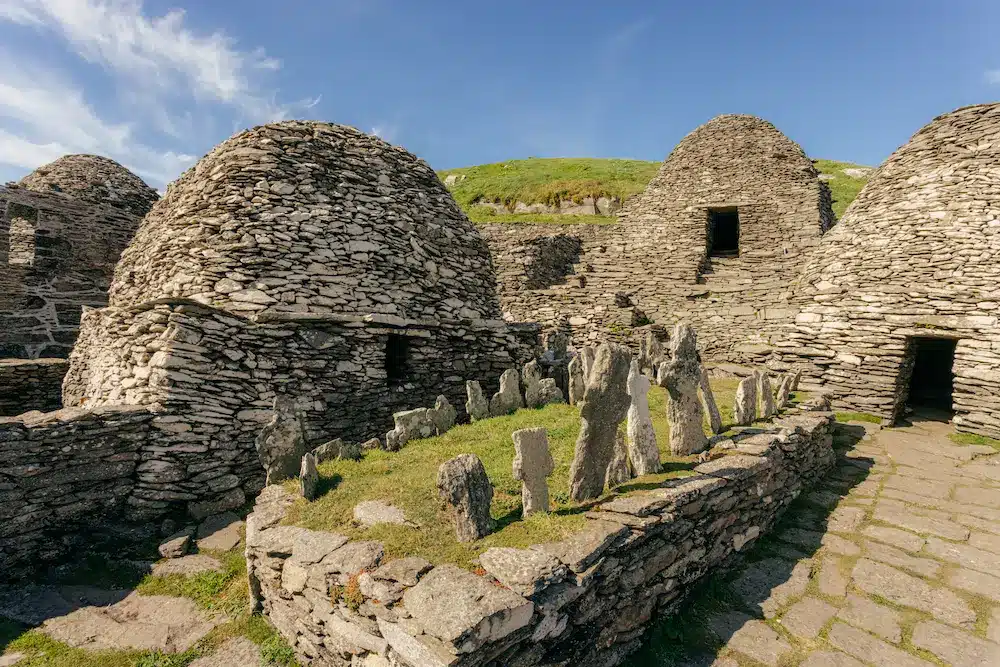
Skellig Michael is a steep Atlantic island 12 kilometres off the coast of County Kerry. Today it is recognised as a UNESCO World Heritage Site, but its significance comes from a monastic settlement established there in the early medieval period. The island’s isolation, exposure, and limited access shaped how that settlement developed and why it has survived.
Early Monastic Settlement
The most important period in the island’s history began between the 6th and 8th centuries, when monks established a settlement on Skellig Michael. This settlement is traditionally associated with St. Fionán, who is credited with founding the community on the island. They chose the island deliberately, seeking separation from mainland society and a life focused on prayer, work, and survival in a remote environment.
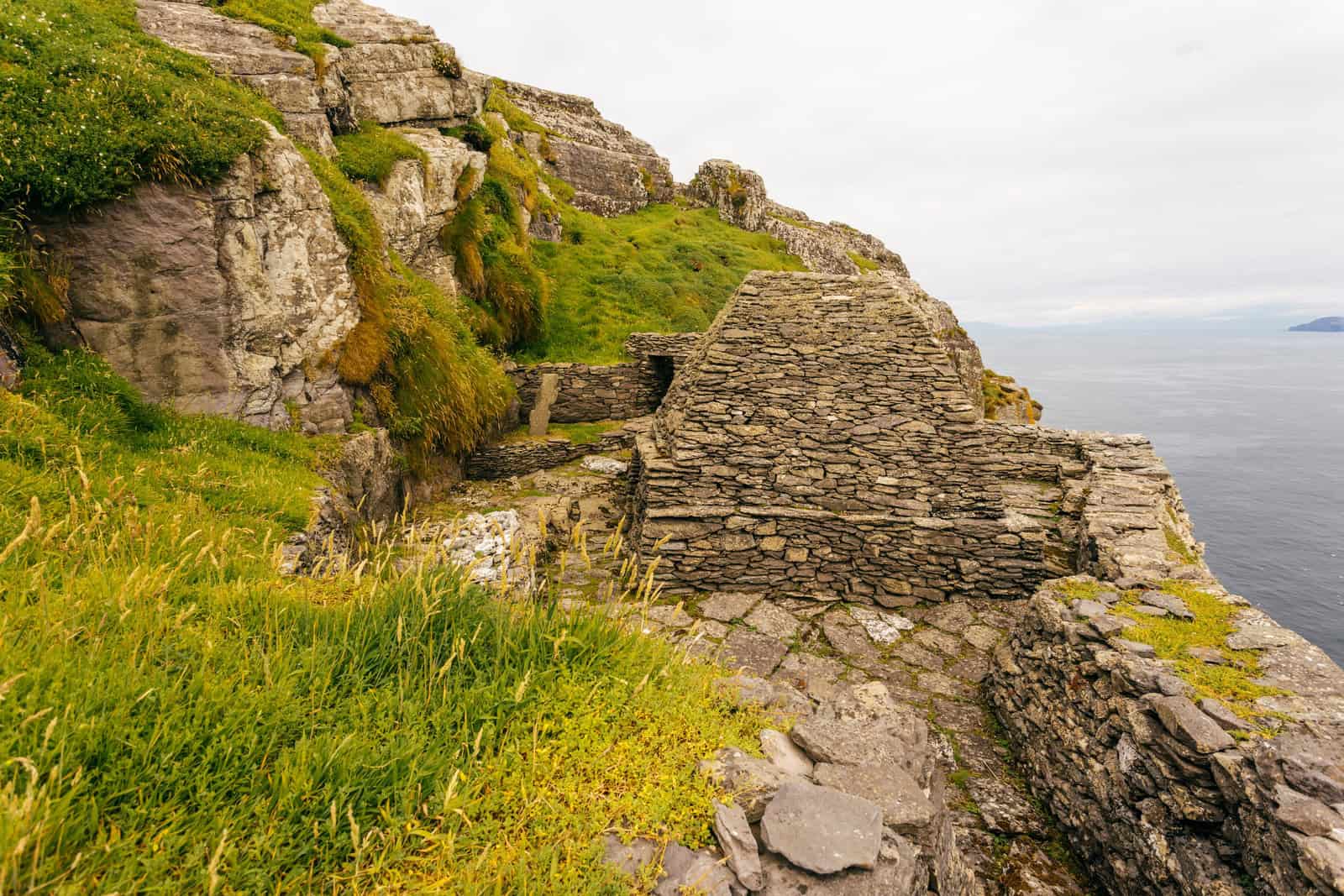
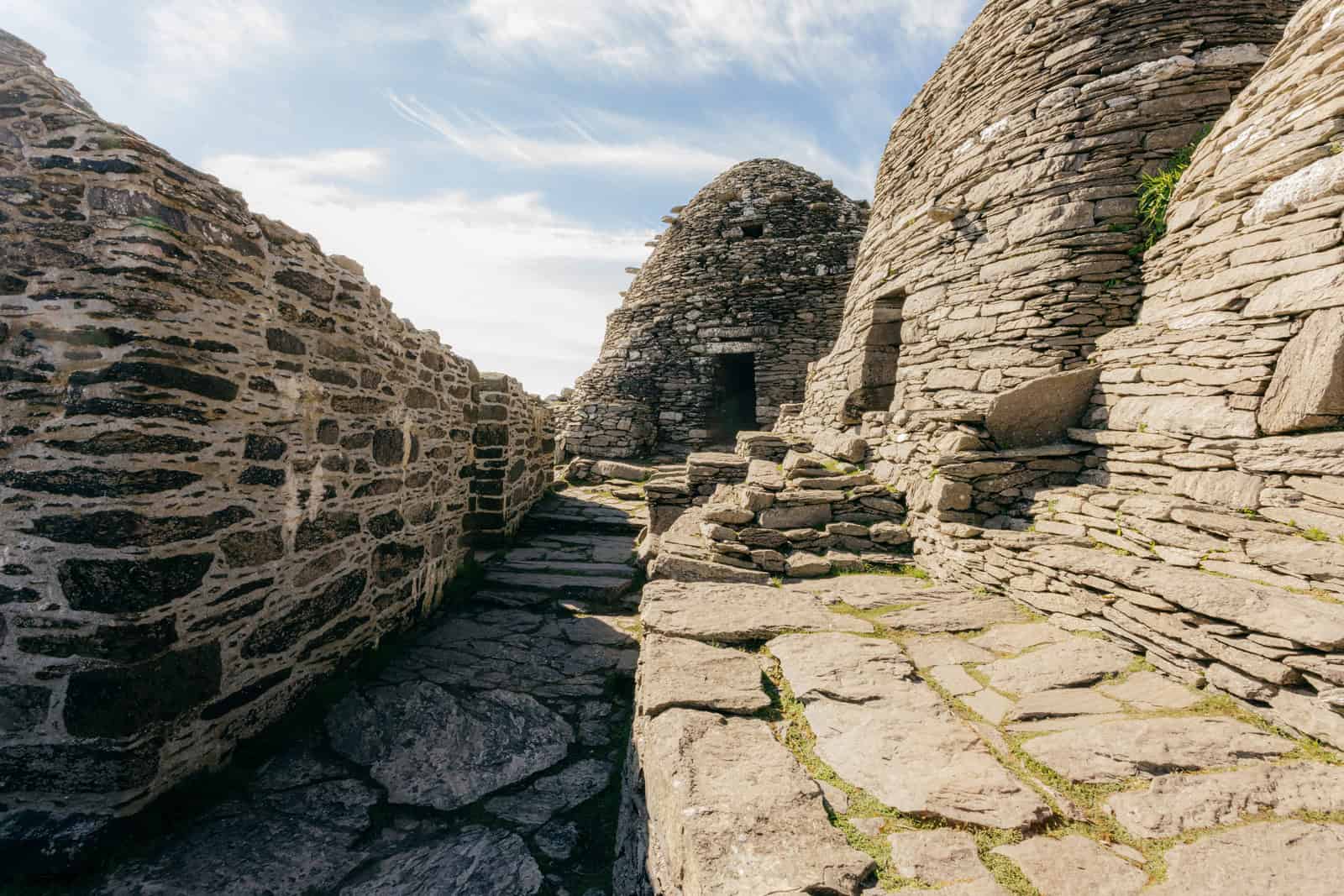
The monastery was built on a narrow terrace approximately 180 metres above sea level. The structures were built using drystone construction techniques, without mortar, using stone taken directly from the island. The best known buildings are the clocháns, or beehive huts, which remain intact today.
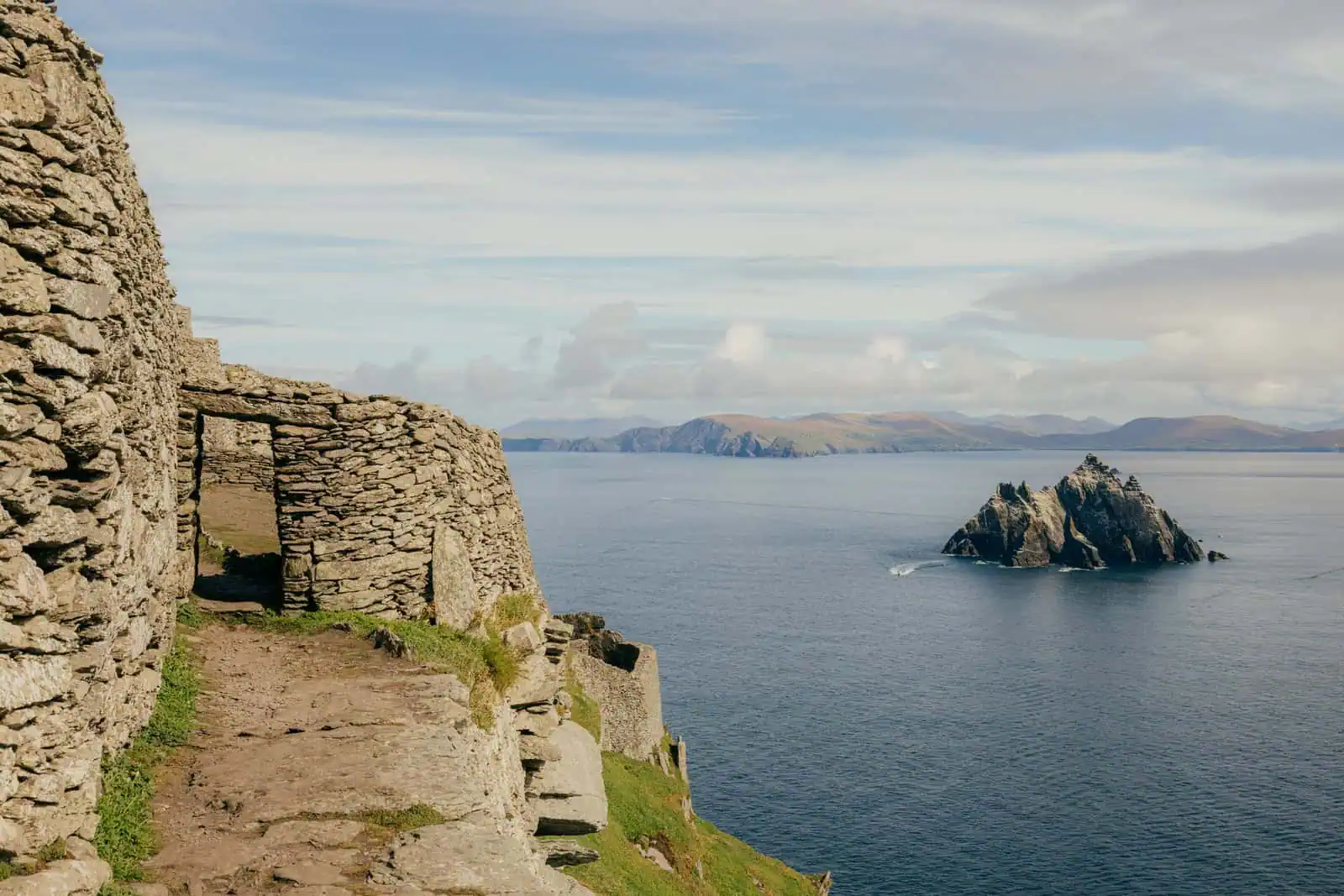
The monks adapted to the conditions of the island. They relied on fishing, seabirds, and small-scale gardening on constructed terraces. Soil was limited, so it had to be built up using layers of organic material carried up from the shoreline, including seaweed. Fresh water was collected and stored in cisterns carved into the rock.
Access to the settlement was by steep stone steps cut into the rock. Today, reaching the monastery requires climbing the 618 steps, reflecting the physical demands of reaching the site.
Quick Facts: Skellig Michael History
| Feature | Detail |
|---|---|
| First Recorded References | Early Medieval Period |
| Monastic Population | ~12 Monks plus 1 Abbot |
| UNESCO Inscription | 1996 |
| Highest Point | 218 metres (South Peak) |
| Steps to Monastery | 618 stone steps |
Life on the Island
Life on the island was structured and practical. The monks divided their time between prayer, manual labour, and study. The location itself was central to their way of life. In early Irish Christianity, isolation was seen as a path to spiritual focus, and Skellig Michael represented one of the most extreme examples of that idea.
The island was never completely cut off. It was part of a wider network of monastic sites across Ireland, and there is evidence of contact with the mainland. However, the conditions on the island meant that the community remained small and self-sufficient.
In the 9th century, the monastery was attacked during Viking raids, with records noting an assault in 823 AD. Despite this, occupation of the site continued for several more centuries.
Abandonment and Transition
By the 12th or 13th century, the monastic community had left the island. This was likely due to a combination of environmental pressures and changes in monastic practice. The monks relocated to the mainland at Ballinskelligs, where conditions were more manageable.
Although the settlement was no longer permanently occupied, Skellig Michael continued to be used as a place of pilgrimage. Its association with early Christian life in Europe remained significant long after the community had left.
In much more recent times, Skellig Michael gained recognition through Star Wars, which brought global attention to the island.
19th Century Developments
The next major phase in the island’s history came in the 19th century, when lighthouses were constructed. The lighthouses were built in the 1820s as part of efforts to improve maritime safety along the Atlantic coast. This required the development of access routes and infrastructure, including a road cut into the rock.
The lower lighthouse remains in operation today. These additions represent a distinct layer of the island’s history, separate from the monastic period but still shaped by the same environmental conditions.
Recognition and Conservation
Skellig Michael was inscribed as a UNESCO World Heritage Site in 1996. It is recognised for its well-preserved monastic remains and its representation of early Christian life in Europe in an extreme environment.
Today, the island is managed by the Office of Public Works. Visitor numbers are limited, and access is controlled to protect both the archaeological site and the surrounding seabird habitat. Conservation work focuses on maintaining the drystone structures and ensuring the long-term stability of the site.
In season, you can see wildlife on and around the Skelligs, including seabirds using almost every suitable ledge and rock surface, particularly gannets on Little Skellig and puffins on Skellig Michael.
Understanding the Site Today
The monastery remains largely intact today, but access is demanding. Reaching the island depends on sea conditions, and visiting the settlement requires climbing the stone steps with no handrails.
If you’re planning a visit, it helps to understand the practical difference between a landing tour and an eco tour, as they offer very different ways to experience the island.
The island’s significance comes from the combination of its preservation and its location. The same factors that shaped the monks’ lives continue to define the experience of visiting.