
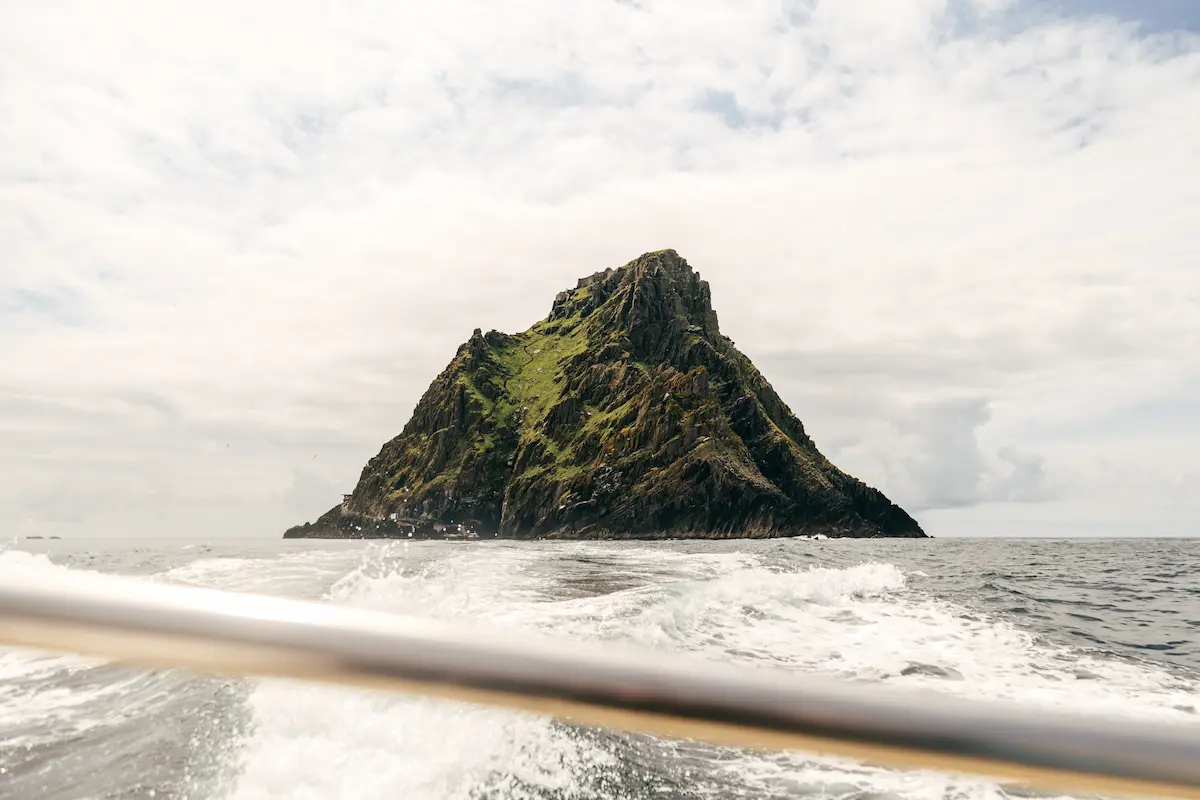
Skellig Michael was inscribed as a UNESCO World Heritage Site in 1996. It earned this status because it is an exceptionally well-preserved example of an early Christian monastic settlement. Situated 12 kilometres off the coast of County Kerry, the site represents a period of history where religious devotion drove humans to live in one of the most remote and challenging environments in Europe.
UNESCO recognises sites that possess "Outstanding Universal Value." For Skellig Michael, this value lies in its unique "architectural ensemble" and its illustration of a significant stage in human history. It is a place where the natural landscape and human construction merge, creating a site that has remained largely unchanged for over a thousand years.
The UNESCO Criteria for Inscription
To become a World Heritage Site, a location must meet at least one of ten selection criteria defined by UNESCO. Skellig Michael was inscribed under two cultural criteria:
Criterion (iii): the site bears a unique or exceptional testimony to a cultural tradition or civilisation. In this case, the monastery represents the extreme form of early Christian monastic life that developed in Ireland during the early medieval period.
Criterion (iv): the site is an outstanding example of a type of architectural ensemble that illustrates a significant stage in human history. The drystone structures on Skellig Michael demonstrate how a religious settlement adapted to an exposed Atlantic environment.
The preservation of the site is largely due to its isolation. While many mainland monasteries were destroyed or altered by later construction, the structures on Skellig Michael remained protected by their remote location.
Origins of the Monastic Settlement
The exact date of the monastery’s foundation is not recorded in contemporary documents, but historical evidence suggests it was established between the 6th and 8th centuries. Tradition attributes the founding to Saint Fionán.
The monks who settled here followed the tradition of peregrinatio pro Dei amore — “pilgrimage for the love of God”. This involved leaving society behind to live in seclusion. By retreating to this jagged rock, the monks believed they could achieve a higher level of spiritual purity through solitude, prayer, and manual labour.
Despite the harsh conditions, the community persisted for over 600 years. It survived Viking raids in the 9th century and the extreme weather of the North Atlantic before the monks eventually moved to the mainland at Ballinskelligs in the 13th century.
The Architecture of Skellig Michael
The most striking feature of the island is the monastic enclosure, perched on a narrow terrace 180 metres above sea level. The construction is entirely drystone masonry, meaning no lime mortar or cement was used to hold the rocks together.
The Clocháns (Beehive Huts)
The monks lived in six beehive-shaped huts known as clocháns. These structures are circular on the outside and rectangular on the inside. The walls are thick and designed to be completely waterproof. By using a technique called corbelling, each layer of stone was laid slightly inward until the roof could be capped with a single flat stone. This design allowed rain to run off the exterior without ever penetrating the living quarters.
The Oratories
In addition to the huts, there are two small oratories where the monks prayed. Like the clocháns, these were built using drystone techniques. The larger oratory is a remarkable feat of engineering, standing as a testament to the skill required to build permanent structures on a steep cliff face.
The Retaining Walls and Terraces
Living on a vertical rock required the monks to engineer the landscape itself. Before they could even think about shelter, they had to manufacture flat ground by raising massive drystone retaining walls to create artificial terraces. These terraces were used for the buildings and for small gardens where the monks grew vegetables and medicinal herbs. This was essential for survival, as the island offered very little natural soil.
The 618 Stone Steps
Accessing the monastery required a feat of physical endurance. The monks carved three sets of steps into the rock: the East, South, and North steps. Today, visitors primarily use the South steps, which consist of 618 stone steps winding up the side of the mountain.
These steps were not just a means of getting from the water to the summit; they were a part of the spiritual journey. Every stone was placed by hand, and the steep climb served as a daily reminder of the physical and spiritual effort required to maintain their way of life.
The geology of Skellig Michael played a role in this construction. The island is made of Old Red Sandstone, which naturally fractures into flat sheets. This made it the perfect material for building steps and huts, provided you had the patience and strength to move the stones.
Daily Life on Skellig Michael
Living on Skellig Michael was a constant struggle for survival. The monks’ diet was limited but sustainable. They relied on fish, eggs and meat from birds, and small amounts of vegetables grown in the man-made terraces. Freshwater was also collected in stone cisterns, as there are no natural springs on the rock.
The monks were not entirely isolated, they were part of a wider network of early Christian settlements in Ireland. Manuscripts were likely written and studied here, and the community remained active even during the height of the Viking Age.
The 19th-Century Lighthouses
While the monastic settlement is the reason for the UNESCO status, the island’s later history also contributes to its significance. In the 1820s, the Corporation for Preserving and Improving the Port of Dublin (now the Commissioners of Irish Lights) decided to build two lighthouses on the island.
This involved a massive engineering project that included blasting a road around the perimeter of the rock. The lighthouses were essential for protecting Atlantic shipping routes. While the upper lighthouse was eventually abandoned, the lower lighthouse was automated in the 1980s and still functions today. This period added another layer of human history to the island.
Ecological Importance and Seabirds
Skellig Michael is not just a cultural monument; it is a major site for North Atlantic biodiversity. The island and its neighbour, Little Skellig, form one of the most important seabird colonies in Ireland.
Although the UNESCO designation focuses on the cultural heritage of the monastery, the island is also an internationally important seabird site. During the breeding season, birds occupy almost every usable ledge and rock surface on the islands:
- Puffins: They arrive in late spring and nest in burrows in the soil.
- Gannets: Little Skellig is the second-largest colony of Northern Gannets in the world.
- Manx Shearwaters: Spend their lives at sea but return to the island at night to nest.
- Storm Petrels: Tiny, elusive birds that nest in the crevices of the ancient monastic walls.
The relationship between the wildlife and the history is deep. The monks lived alongside these seabirds for centuries, and today, the protection of the birds is as important as the preservation of the stone huts.
Preservation for the Future
The goal of the UNESCO management plan is to ensure that the island remains a clear reminder of how early Christian monks lived and worked in close contact with a harsh natural environment. The Office of Public Works (OPW) manages the site, carrying out repairs to the drystone structures and maintaining the historic steps so that Skellig Michael can be preserved for future generations.