
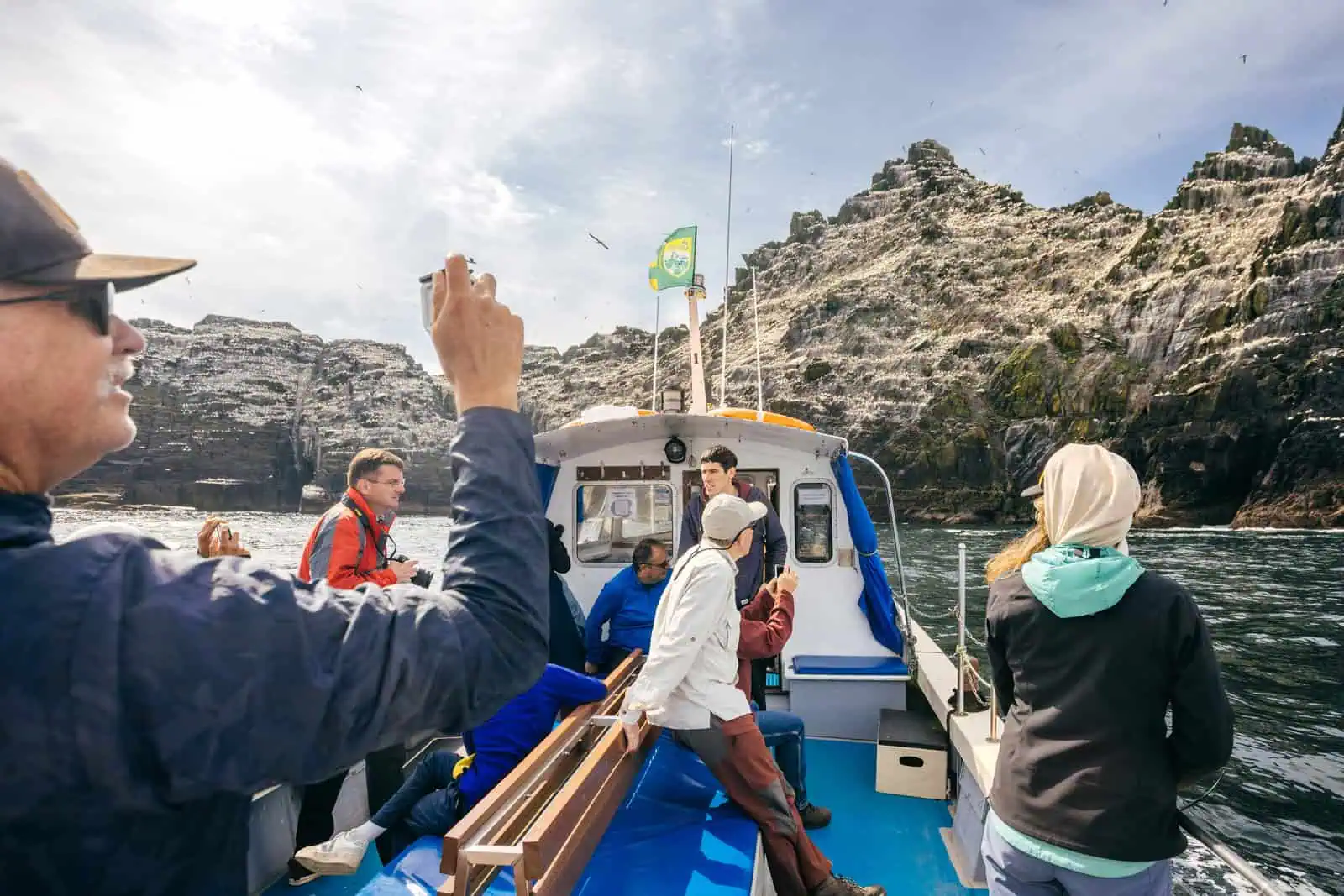
Little Skellig is home to one of the world’s largest Northern Gannet colonies, with roughly 35,000 breeding pairs packed onto its ledges in the summer season. Landing is strictly prohibited, so when you head out on a tour from Portmagee Marina you see the colony from the water.
Because the gannets nest mainly on the higher ledges, we can bring the boat in for a detailed look at the colony without disturbing the birds, while still keeping the right distance for conditions on the day.
Little Skellig: a seabird rock off County Kerry
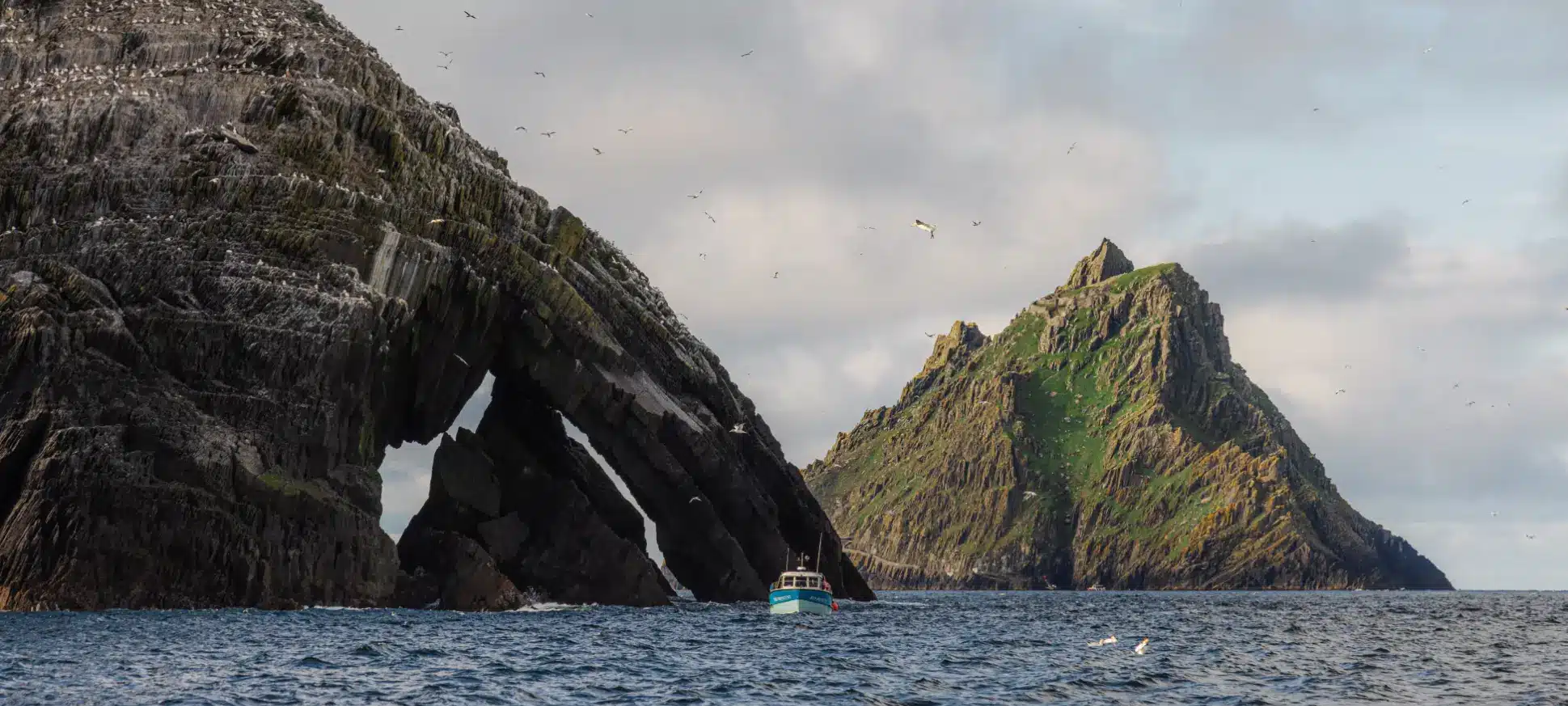
Little Skellig is located about 12 km (8 miles) off the coast of County Kerry, out in the Atlantic.
It is the smaller of the two Skellig Islands and, unlike Skellig Michael, it is not managed as a visitor site. It is a steep, exposed rock with limited ledges, which is exactly what makes it valuable to seabirds.
When we bring people out to see the colony from the boat, what stands out straight away is how the island works as a breeding habitat. The rock faces provide narrow shelves for nest sites, height and steep drop-offs that reduce access for predators, and immediate access to feeding waters.

Why it looks snow-capped
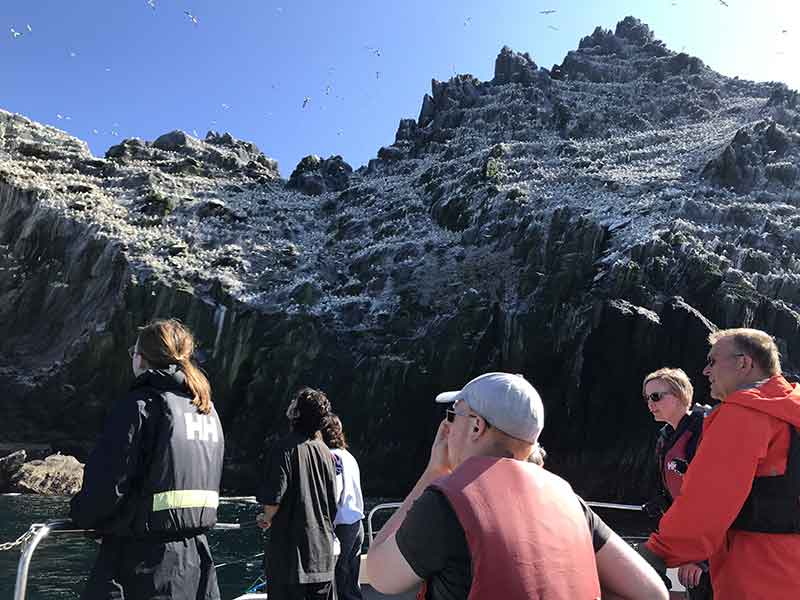
From several kilometres away, the rock looks pale or snow-capped. This appearance is caused by two main factors:
- the sheer number of adult gannets, which are bright white
- accumulated guano staining the rock during the breeding season
On Little Skellig, the scale of the colony means guano builds up quickly and is visible from a long way off.
Northern Gannets: what you are looking at
Gannets are specialists, and their breeding strategy is built around:
- returning to the same rock ledges each year
- raising a single chick in a short season
- travelling far to find fish, then returning repeatedly to feed the nest
- using plunge-diving to exploit prey near the surface
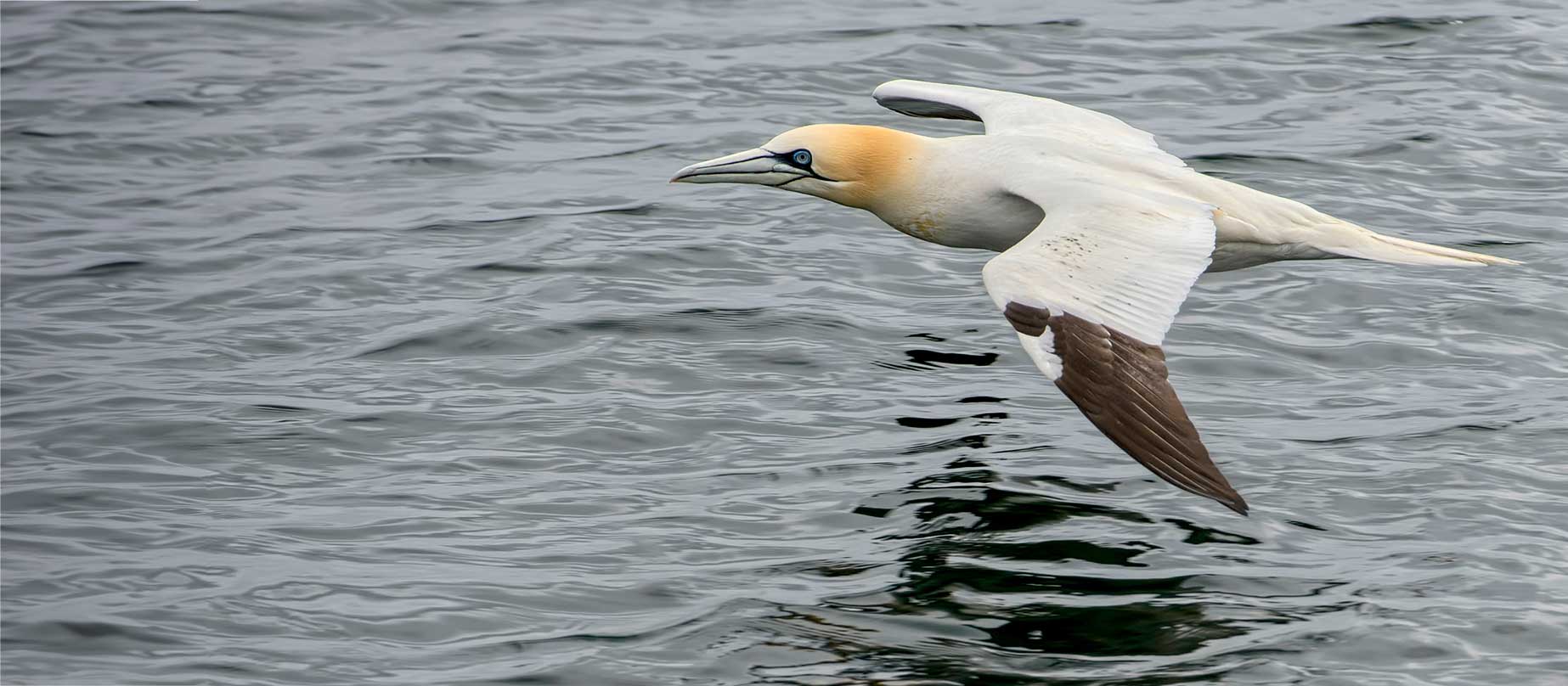
Adults have high-contrast markings that stand out against the rock:
- a white body with black wingtips, especially when they tilt their wings
- a pale yellow head and neck in the breeding season
- a long, pointed bill and a streamlined shape built for speed
Life stages: why some birds look much darker
Younger birds are darker and more mottled, and they take a few years to grow into the full adult look.
How gannets sit on the ledges
Gannets nest in extremely close quarters. From the water, you will often see:
- birds facing into the wind to stabilise themselves
- repeated head movements and bill-pointing, part of normal communication between neighbours
- brief bursts of wing-flapping to keep balance when another bird lands nearby
The rock has limited safe nesting space, so the colony expands by filling almost every usable surface.
The scale of the colony (roughly 35,000 pairs)
Little Skellig is estimated to hold roughly 35,000 breeding pairs of Northern Gannets.
- Adults are constantly flying out to feed and back to the ledges.
- Pairs take turns sitting on the egg and then feeding and guarding the chick.
- Each pair holds a tiny patch of space, often only enough room to sit and turn.
Plunge-diving: how gannets feed
A typical dive follows these stages:
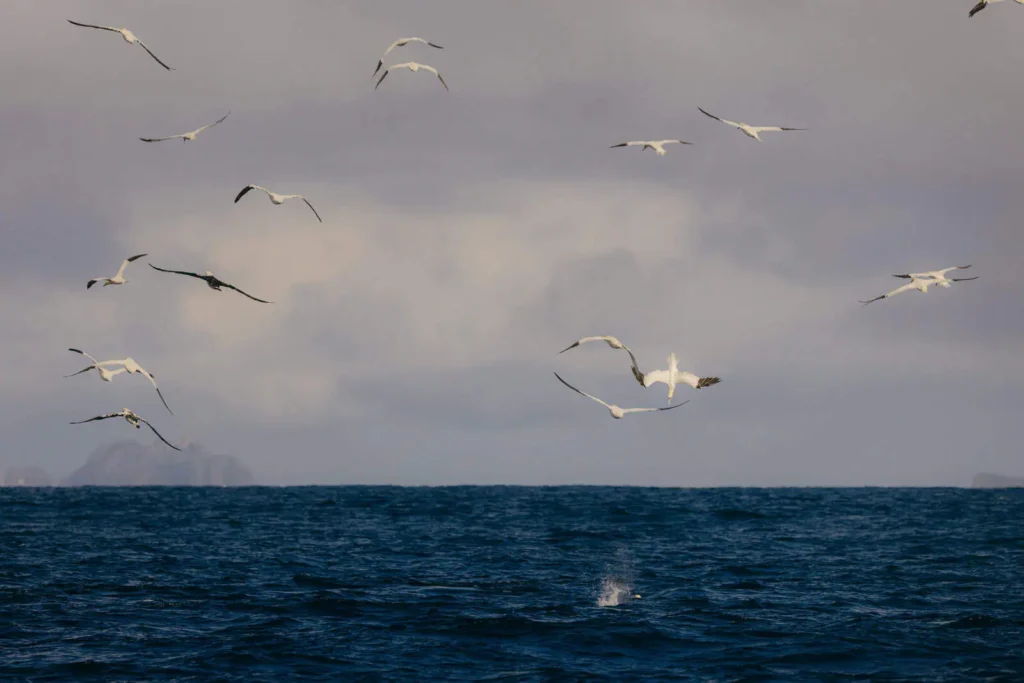
- Cruises low or climbs for a wider view, scanning for fish near the surface.
- Angles down and accelerates toward the target area.
- Hits the sea with the body streamlined and wings pulled back.
- Pursues fish below the surface using wings and feet.
- Surfaces and takes off again, often swallowing prey quickly.
Gannets are adapted for this. Their bodies are built to tolerate high-force entry into water, and their streamlined shape reduces resistance. From the deck, you may see clean spear-like entries on calmer days, and more chaotic splashes when the sea is rough.
When you see large numbers of gannets diving together, it usually means there is a shoal of fish just below the surface. This is often a great sign that dolphins are nearby, as they tend to hunt the same shoals.
You will not always see repeated diving right beside the boat. Feeding depends on where fish are on the day, and gannets may be commuting to feeding areas farther out.
Breeding season on Little Skellig (February to late October)
Our boat tour season runs from April to October, but the gannets’ breeding season starts earlier and runs later.
- February to March: gannets begin returning to Little Skellig, with older males often appearing as early as February to establish and defend nest sites.
- April: the colony reaches full occupancy, which aligns with the start of the boat tour season.
- April to May: eggs are typically laid.
- June: most hatching happens in June.
- Late August to September: chicks (known as gugas) fledge from the ledges.
- Late October: the majority of the colony departs for the open Atlantic, which broadly aligns with the end of the boat tour season.
Nest sites and chick development (what is happening on the ledges)
Gannets nest on open ledges with little shelter. Nests are built from seaweed, grasses, and other material collected at sea or along the coast. Space is limited, so each pair defends a small area around the nest. Even from a distance, you can often see the result: tight rows of birds, each holding position and facing into wind and spray.
Each pair typically lays a single egg. When chicks hatch, they are fed frequently with fish carried back by adults. As the season progresses, chicks become more robust and obvious among the adults, especially on ledges where the angle lets you see into the nesting area from the boat.
Migration: where do they go in winter?
Northern Gannets are not resident on the Skelligs all year. After the breeding season, they disperse widely over the Atlantic. They spend the winter at sea and return to breeding sites in spring.
Seeing Little Skellig from the water
Little Skellig is viewed from the water on all trips. If you want more time observing the rock and the birds at close viewing range, the Skellig Michael Eco Boat Tour is typically the better format because it is planned around circling and observing the islands. On the Skellig Michael Landing Tour, the day is structured around going ashore on Skellig Michael, with Little Skellig included as part of the overall experience.
Observing the colony responsibly from the boat
In settled conditions, we can often bring the boat in quite close to the rock faces for a detailed view. The gannets tend to nest on the higher ledges, so that close-in viewing can be done without disturbing them, while still staying sensible for the swell and the sea conditions on the day.
Sea conditions can be choppy, but we find as much shelter as we can close to the island depending on the wind direction and where the sea swell is coming from.
Keep an eye on the rocks at the base of Little Skellig, too you can often spot seals hauled out and resting there.
Binoculars help you see details like: adults bringing nest material, brief partner changes at a nest, and short disputes between neighbours. They also make it easier to see how birds use the wind to land. A gannet landing on a crowded ledge is a controlled manoeuvre, with feet stretched forward and wings held out until the last moment.
The Importance of Little Skellig
Little Skellig concentrates an enormous amount of seabird life into a very small place. It is a natural, undisturbed breeding site, and that is part of what makes it so valuable.
The gannets don't just stick to one corner; they occupy practically every ledge, ramp, and narrow shelf where the rock allows a bird to sit and breed.