
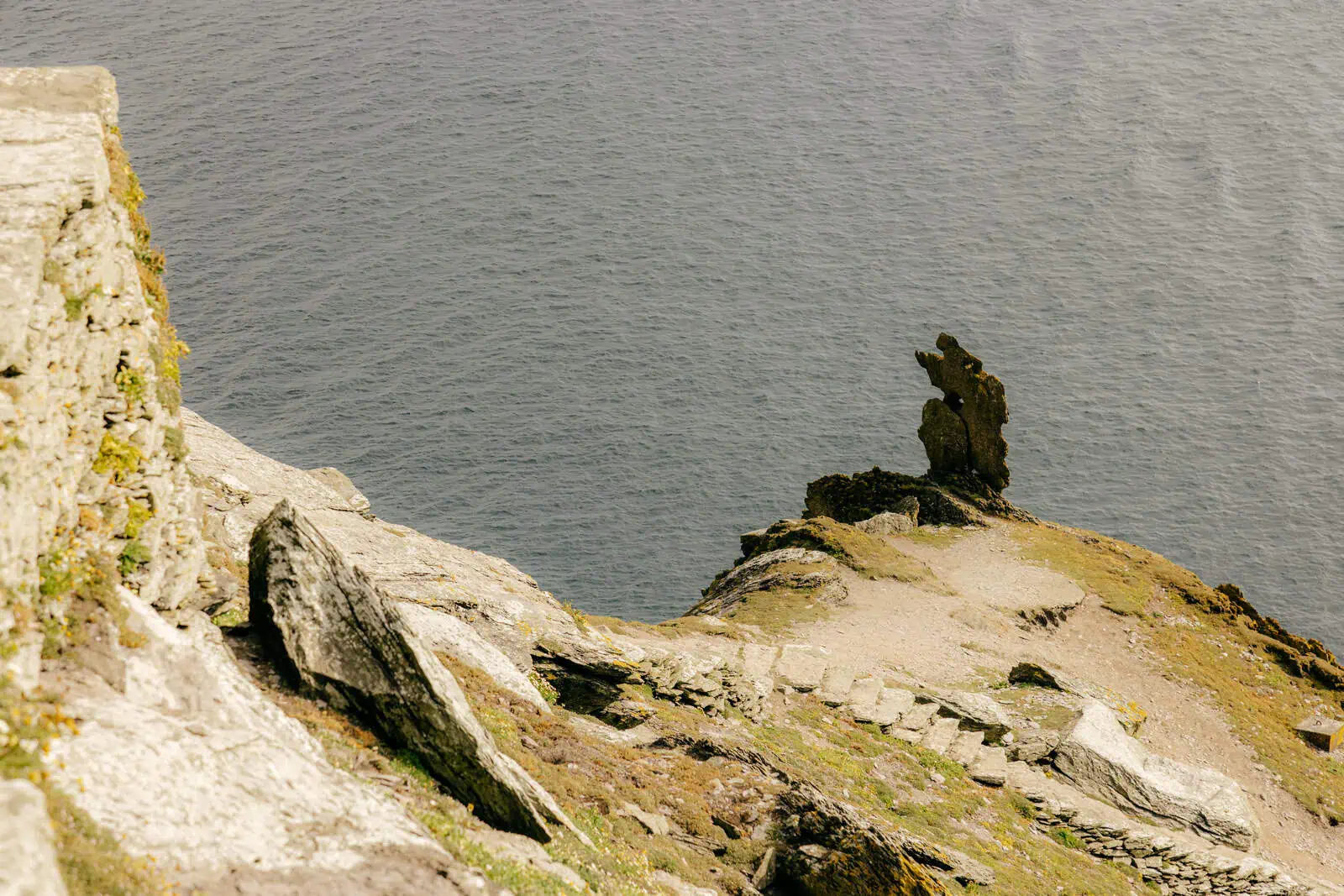
Skellig Michael is the Star Wars filming location in Ireland that introduced County Kerry to a global cinema audience. The island was famously used as the setting for Ahch-To, the remote planet where Luke Skywalker lives in exile during the Star Wars sequel trilogy. What is less widely known is how filming on such a remote Atlantic island was actually made possible.
We supported the production during filming, transporting crew and equipment to the island under tightly controlled conditions. With access limited entirely to the sea, we became a consistent part of how the crew reached and worked on the island each day.
Located 12 kilometres off the coast of County Kerry, Skellig Michael is also a UNESCO World Heritage Site, defined by its early Christian monastery, steep Atlantic cliffs, and exposed conditions. These same qualities that made it visually striking on film are exactly what make it difficult to reach and work on.

When Hollywood Came to Kerry
In 2014, word began to circulate through the small community of Portmagee that something significant was happening. Location scouts had been seen along the coastline, and rumours quickly pointed to a major film production. When it was confirmed that Lucasfilm had chosen Skellig Michael, the reaction locally was a mix of pride and disbelief.
For those of us working on the water, the significance was immediately clear. Skellig Michael had always been a place of real importance, a monastic settlement built in the early medieval period, accessed only by sea, and set within a harsh Atlantic environment. Now it was about to become one of the most recognisable locations in modern cinema.
You cannot access Skellig Michael without the right conditions and the right experience. There are no roads, no alternative routes, and no margin for error. The island dictates how and when it can be reached.
The Logistics Behind the Film
Filming on Skellig Michael required a level of coordination that is not visible in the finished film. There is no infrastructure on the island, no electricity, and no conventional landing facilities beyond a narrow access point at Blind Man’s Cove.
Everything had to be transported by sea. Cameras, safety equipment, supplies, and crew all moved from Portmagee Marina across open Atlantic water. Even in calm conditions, the crossing requires attention. In unsettled weather, it becomes significantly more challenging.
This is where local marine experience became essential. Our boats were used throughout the shoot to move crew and equipment safely, working within tight windows dictated by swell, wind, and tide. The production could not afford delays caused by misjudging conditions, and more importantly, it could not risk unsafe access to the island.
Early Mornings and Filming Windows
Filming days were structured around conditions. Boats were prepared early, often before sunrise, with crossings timed around the safest available conditions.
What stood out throughout was the level of care taken. Filming was restricted and carefully controlled, with a clear awareness that Skellig Michael is a protected site. The island could not be adapted to suit the production. Everything had to adapt to the island.
Daisy Ridley, who plays Rey, has spoken in interviews about how physically demanding it was to navigate the stone steps in costume and in the wind. That difficulty was entirely real and nothing about those conditions was constructed for the camera.
In this Tourism Ireland promotion video for the film, one of our boats is shown at the start, moving crew and equipment as part of a tightly managed schedule.
From Monastic Settlement to Jedi Sanctuary
Skellig Michael appeared in Star Wars: The Force Awakens (2015) and Star Wars: The Last Jedi (2017), becoming the most recognisable location in the sequel trilogy. For anyone who has wondered where Star Wars was filmed in Ireland, the answer is here in Kerry on a real island, in the Atlantic, 12 kilometres off the coast.
On screen, the island became Ahch-To, a place of retreat and isolation. In reality, that isolation has always defined the island. The monks who settled here did so deliberately, choosing a location that removed them from the mainland and placed them in direct contact with the Atlantic.
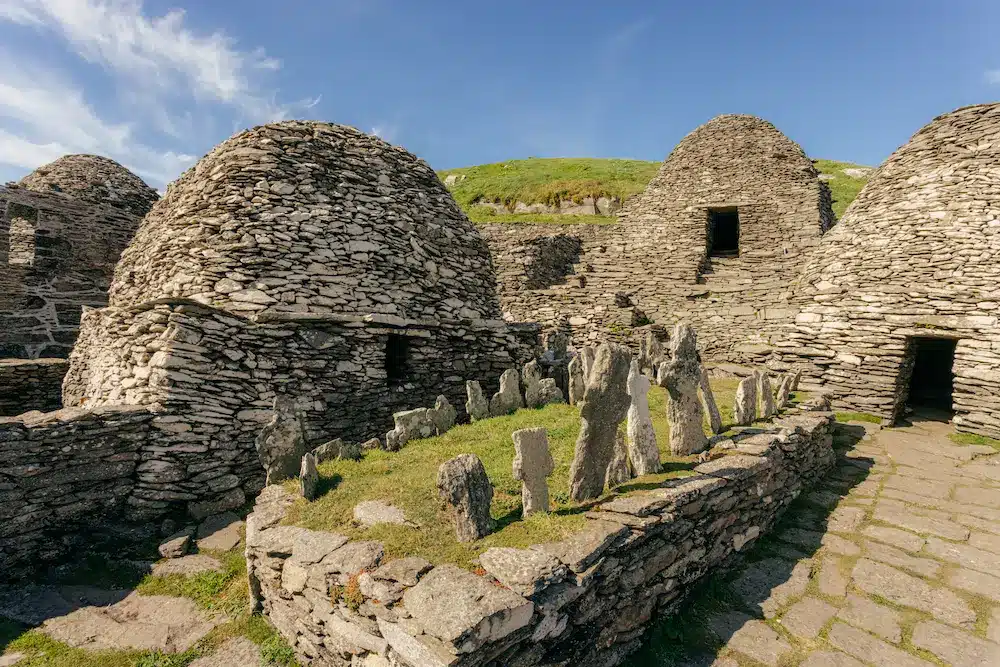
The stone huts, or clocháns, and the steep climb of 618 steps were built as part of a functional settlement. This is what gives the island its authenticity on screen. The filmmakers did not need to construct a setting. They used one that already existed.
Scenes such as Rey’s ascent to the monastery work because they take place in a real environment shaped over centuries, not in a controlled or artificial space.
Recognisable Filming Locations
Visitors to Skellig Michael will recognise several key features from the films. The monastic settlement, positioned approximately 180 metres above sea level, forms the centre of Luke Skywalker’s retreat. The stone steps remain unchanged and are used directly in the film. The surrounding cliffs and Atlantic backdrop provide the scale and exposure that define the location visually.
The island’s wildlife also became part of the production. Atlantic puffins, which are present in large numbers during the summer months, kept wandering into frame during filming. Rather than remove them digitally, the production team used them as inspiration and the Porgs of The Last Jedi were born from that compromise. It is one of the more unexpected ways the Skelligs contributed to a galaxy far, far away.
A Local Effort Behind the Production
While the island features prominently on screen, the production depended on a wider local effort. Portmagee became a base of operations, with accommodation, logistics, and coordination centred around the harbour.
At the core of that effort was access to the island itself. Every movement of crew and equipment depended on safe marine transport, and that in turn depended on experience. The remoteness that makes Skellig Michael so distinctive also makes it operationally complex.
A Legacy Beyond Star Wars
The Star Wars films brought international attention to Skellig Michael, but they represent only one part of the island’s story. It remains a UNESCO World Heritage Site, recognised for its cultural importance and its well-preserved monastic remains. It is also a significant seabird habitat, with colonies occupying much of the island during the breeding season.
Visiting Skellig Michael Today
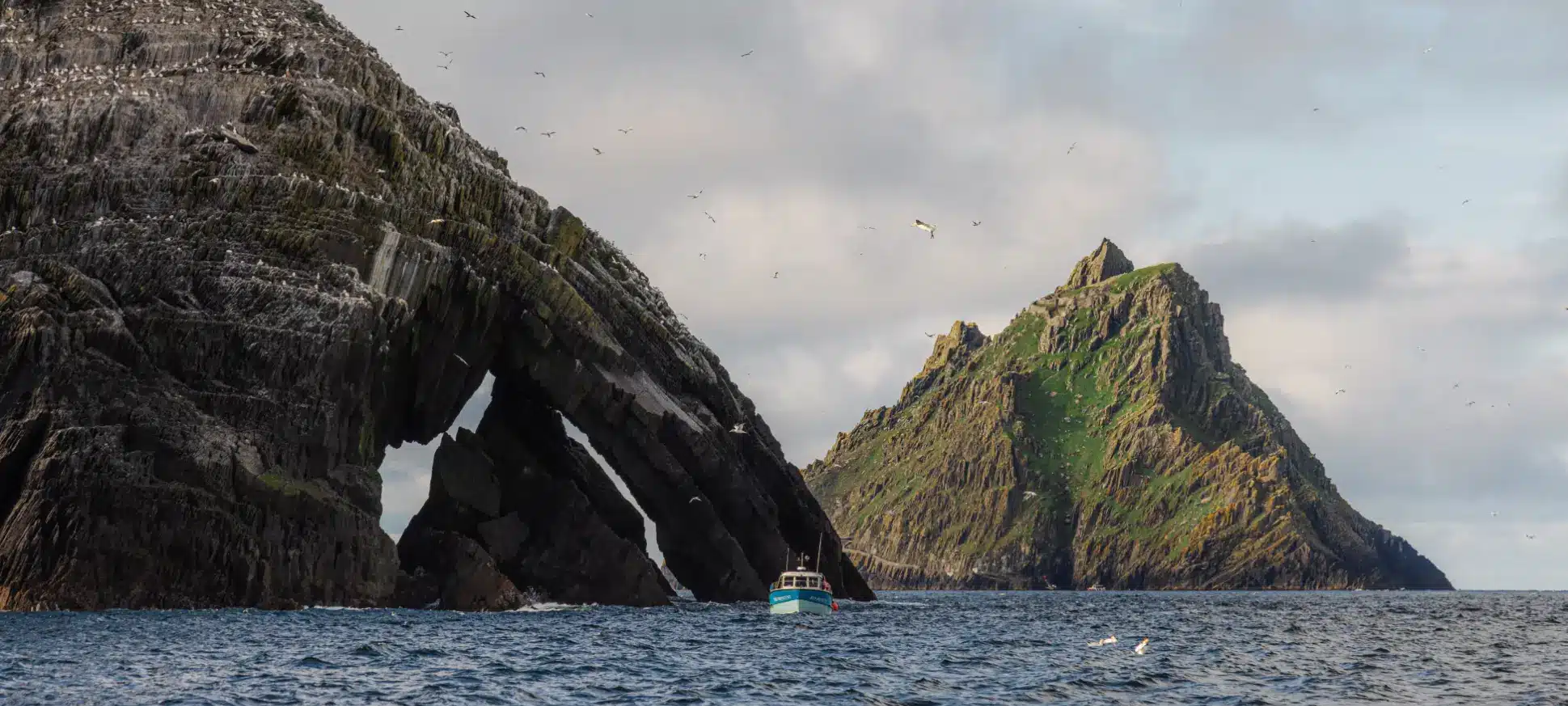
There are two primary ways to experience the island. On a Skellig Michael Eco Boat Tour, you stay on the boat as we circle the island, giving you a clear view of the cliffs, the monastery, and the local wildlife. Skellig Michael Landing Tour options allow visitors to step onto Skellig Michael and climb to the monastery, offering direct access to the locations seen in the films. This option is physically demanding and depends entirely on weather conditions.
Both options make it clear why the island was chosen for filming. The difference lies in how close you want to get and how you want to experience it.
Planning Your Visit
The Star Wars connection draws people to Skellig Michael, but it does not define it. The island’s character comes from its history, its location, and the conditions that shape it. The eco tour season runs from April to October and the landing from May to September with all departures dependent on weather conditions. Tours are limited and in high demand, particularly during peak summer months, so booking in advance is recommended.